
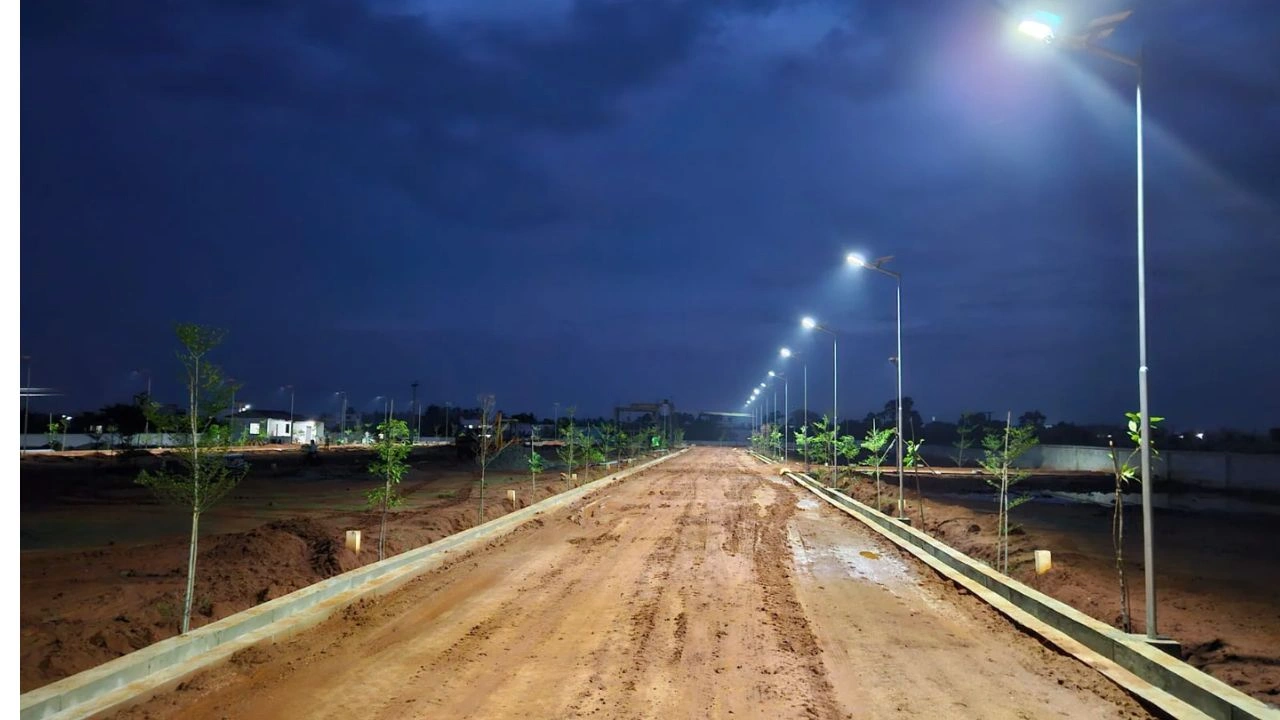
Urban infrastructure is undergoing a quiet but powerful transformation, and street lighting is one of the clearest examples. In Austin, Texas—one of the fastest-growing and most sustainability-focused cities in the United States—a new residential neighborhood is proving that modern communities no longer need to depend entirely on the power grid for basic public services. The introduction of grid-free solar streetlights marks a significant step toward resilient, cost-effective, and climate-friendly urban development.
A New Model for Street Lighting
The project was delivered by Streetleaf, a Florida-based company specializing in off-grid solar lighting solutions. In the Dittmar-Slaughter area of Austin, Streetleaf installed 40 standalone solar streetlights in a new housing development, demonstrating how modern neighborhoods can be illuminated without underground cabling or grid connections.
Unlike traditional streetlights that rely on centralized electricity supply, these systems operate entirely independently. Each light pole integrates high-efficiency solar panels, LED luminaires, and lithium iron phosphate (LFP) batteries. During the day, solar panels capture sunlight and store energy in batteries, which then power the lights throughout the night.
Read Also:Top Home Solar Batteries 2026 — Capacity, Power & Expandability
Why Grid-Free Matters More Than Ever
Grid-free solar streetlights offer advantages that go far beyond sustainability branding. One of the most important benefits is resilience. When grid-connected streetlights fail during power outages—caused by storms, heatwaves, or grid overload—off-grid solar lights continue operating uninterrupted. For residential areas, this means better visibility, improved safety, and peace of mind during emergencies.
Cost efficiency is another major factor. Traditional street lighting requires trenching, wiring, permitting, and long-term electricity bills. Solar streetlights eliminate many of these expenses. Although the upfront cost can be higher, developers often recover the investment through lower installation costs and zero ongoing electricity charges.
Faster Deployment for Growing Cities
Austin’s rapid population growth puts constant pressure on infrastructure timelines. Solar streetlights simplify the development process by removing the need to coordinate with utility providers. For builders and planners, this can significantly reduce construction time and help projects move forward without delays linked to grid access.
This speed is particularly valuable in new housing developments, where early installation of street lighting improves safety and livability from day one. Solar systems can also be relocated or upgraded more easily than wired lights, adding long-term flexibility for urban planners.
Smart Technology Behind the Light
Modern solar streetlights are far removed from the dim, unreliable systems of the past. Today’s units use intelligent controllers that adjust brightness based on time of night or motion detection, optimizing energy usage without compromising visibility. LED technology ensures consistent illumination with minimal power consumption, while LFP batteries are designed for long lifespans and enhanced safety in high-temperature environments like Texas.
These features make solar lighting suitable not only for residential streets, but also for parking lots, pathways, campuses, and public spaces.
A Scalable Solution Across the Sun Belt
Streetleaf’s Austin project is part of a much larger expansion. The company reports having deployed over 13,000 solar streetlights across 10 U.S. states, primarily in sun-rich regions. This scale demonstrates that solar street lighting is no longer experimental—it is a proven, commercial solution already supporting thousands of communities.
As more cities adopt climate action plans and push for lower emissions, grid-free lighting aligns perfectly with broader sustainability goals. Reduced reliance on fossil-fuel-based electricity translates directly into lower carbon footprints for municipalities and developers alike.
What This Means for the Future of Cities
The success of solar streetlights in Austin reflects a larger shift in how cities think about infrastructure. Instead of expanding centralized systems, communities are embracing decentralized, self-sufficient technologies that are cleaner, smarter, and more resilient.
For residents, this means safer streets and reliable lighting. For developers, it means lower long-term costs and faster project delivery. For cities, it represents progress toward climate resilience and energy independence.
Read Also:post-harvest preservation solar
Conclusion
Grid-free solar streetlights are no longer a niche innovation—they are becoming a cornerstone of modern urban design. Austin’s latest installation shows how renewable energy can be seamlessly integrated into everyday infrastructure, delivering real benefits without compromising performance.
As urban areas continue to grow and climate challenges intensify, solutions like solar street lighting will play a vital role in shaping cities that are not only brighter at night, but also smarter and more sustainable for decades to come.
Related Posts


1 thought on “Grid-Free Solar Streetlights Transform Austin Neighborhoods”