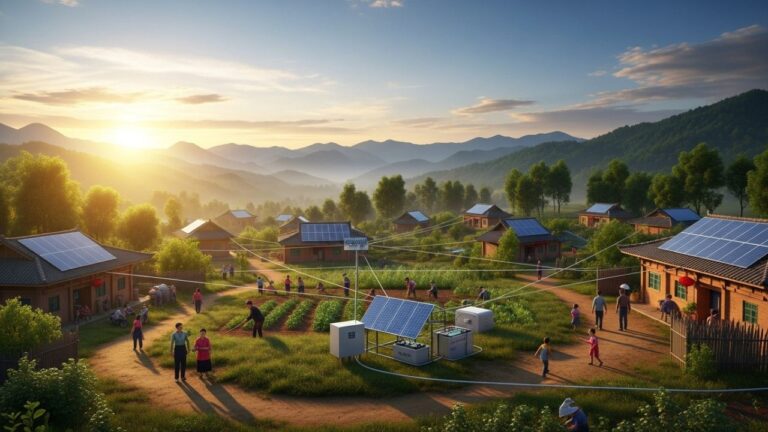

Arizona’s Solar-First Land Policy: Arizona’s decision to prioritize solar panel construction on public land over new housing projects is reshaping conversations around growth, sustainability, and land fairness.
Arizona, a state long defined by rapid population growth and endless sunshine, is now at the center of a heated policy discussion. The Arizona State Land Department (ASLD) has begun prioritizing large-scale solar energy projects on state trust lands, a move that supporters hail as visionary but critics fear could worsen housing shortages. At the heart of the controversy lies a fundamental question: Should public land be use first for clean energy or for building homes?.
As Arizona grapples with climate commitments, rising housing demand, and competing commercial interests, this land-use decision has become a symbol of broader tensions between sustainability goals and everyday economic realities.
Understanding Arizona State Trust Lands
To understand the significance of the ASLD’s policy shift, it is important to first grasp the role of state trust lands. Arizona controls roughly 9.2 million acres of trust land, granted at statehood, with a legal obligation to generate long-term revenue for beneficiaries such as public schools, universities, and hospitals.
By law, the ASLD must manage these lands under a “highest and best use” standard, meaning land decisions should maximize financial returns over time. Traditionally, this has included leasing land for grazing, mining, commercial development, and residential construction. Solar energy is now rapidly joining — and in some cases overtaking — these traditional uses.
What makes the current situation unique is not simply that solar projects are expanding, but that they appear to be receiving structured priority over other land uses, especially housing.
Read Also: Solar Farm Investment in 2025: A Complete Guide to Profiting from Clean Energy
The Solar Suitability Mapping Initiative
One of the most controversial elements of ASLD’s approach is the creation of a solar suitability map. This digital tool categorizes parcels of state trust land based on how ideal they are for solar development, using criteria such as sunlight exposure, proximity to transmission lines, slope, and environmental constraints.
Land parcels are color-code, allowing developers to quickly identify highly favorable solar locations. While the map is publicly available and framed as an informational resource, critics argue it effectively guides developers toward solar projects while offering no equivalent guidance for housing or other industries.
The absence of similar tools for residential development has sparked concerns that solar energy is being quietly position as the preferred — if not default — land use on state trust land.
Housing Developers Raise Red Flags
Home builders and real estate developers have been among the most vocal critics of the policy. Industry representatives argue that Arizona is already facing a significant housing supply challenge, particularly in fast-growing metro areas like Phoenix and Tucson.
According to housing advocates, prioritizing solar leases on prime parcels near infrastructure could reduce the availability of land suitable for residential construction, ultimately pushing housing farther from employment centers and increasing commute times, costs, and sprawl.
They also stress that housing projects generate long-term economic activity, including jobs, property taxes, and community development, which should be weighed alongside the benefits of solar energy.
Renewable Energy Advocates Defend the Strategy
On the other side of the debate, renewable energy proponents argue that Arizona is uniquely position to lead the nation in solar power. With some of the highest solar irradiance levels in the United States, the state can produce clean electricity at scale, helping to meet climate targets and reduce dependence on fossil fuels.
Supporters emphasize that solar projects provide stable, long-term lease revenue to trust beneficiaries while requiring relatively little infrastructure investment compared to residential development. They also note that solar installations can coexist with certain forms of land use, such as grazing, under carefully managed conditions.
From this perspective, prioritizing solar is not anti-housing, but rather a strategic use of land that aligns with long-term environmental and economic interests.
The Role of Executive Leadership
The ASLD’s actions did not occur in a vacuum. In late 2025, Arizona Governor Katie Hobbs issued an executive order instructing state agencies to accelerate clean energy development and remove bureaucratic barriers to energy infrastructure projects.
The order directed the ASLD to propose ways to streamline approvals for renewable energy projects, particularly those already in development or critical to meeting statewide energy goals. While the executive order did not explicitly mandate solar over housing, critics argue that it has influenced how agencies interpret their priorities.
Notably, a detail public report outlining how the ASLD would implement these directives has yet to be released, fueling calls for greater transparency.
Transparency and Public Accountability Concerns
A recurring theme in the controversy is public trust and transparency. While ASLD maintains that its policies are data-driven and aligned with its fiduciary duty, critics argue that major land-use shifts should involve broader public consultation.
Housing advocates, local governments, and tribal stakeholders have all requested clearer explanations of how land decisions are made and how competing interests are weighed. Without detailed disclosures, some fear that decisions favoring solar development could become entrenched before meaningful debate occurs.
Transparency advocates stress that public land decisions have generational consequences, shaping where people live, work, and access resources for decades.
Economic Trade-Offs: Solar vs. Housing
The debate ultimately comes down to economic trade-offs. Solar projects typically offer predictable lease payments over long periods, often 20 to 40 years. Housing developments, while riskier, can generate higher overall economic activity, including construction jobs, retail growth, and municipal tax revenue.
There is also the question of opportunity cost. Once land is leased for large-scale solar installations, it may be effectively remove from other uses for decades, limiting flexibility as population and economic needs evolve.
Policymakers are now being challenge to assess not only immediate financial returns, but also long-term social and economic impacts.
Environmental Considerations Beyond Clean Energy
While solar energy is widely regard as environmentally beneficial, large-scale solar farms are not without environmental concerns. Land disturbance, habitat fragmentation, and water use during construction are all factors that must be manage carefully.
Environmental groups have urged the state to ensure that solar development avoids sensitive ecosystems and includes mitigation strategies. Some argue that prioritizing solar on already disturbed or low-impact lands could reduce conflict with housing and conservation goals alike.
This adds another layer of complexity to land-use planning, reinforcing the need for comprehensive, balanced evaluation frameworks.
Legal and Fiduciary Responsibilities
The ASLD’s mandate to maximize trust revenue is root in law, and any policy shift must withstand legal scrutiny. Critics suggest that favoring one industry without clear comparative analysis could expose the department to legal challenges.
ASLD officials counter that solar energy’s long-term revenue stability aligns well with fiduciary responsibilities and that no land-use category is formally excluded. Still, the perception of preferential treatment has intensified scrutiny of how “highest and best use” is define in a rapidly changing economy.
Community Impact and Public Sentiment
Beyond industry and policy circles, the issue resonates with everyday Arizonans. Residents concerned about housing affordability worry that reduced land availability could push home prices even higher. Others, particularly younger voters, strongly support aggressive climate action and view solar expansion as essential.
Public sentiment appears divided, reflecting broader national debates about growth, sustainability, and equity. Community leaders are increasingly calling for solutions that do not force a zero-sum choice between clean energy and housing.
Read Also: U.S. Renewable Energy Growth Forecast 2026
Possible Paths Forward
Several potential compromises have emerged from the debate. These include developing parallel suitability maps for housing and other industries, prioritizing solar development on less housing-suitable land, and increasing collaboration with municipalities to align land-use decisions with local planning goals.
Some experts have also suggested mixed-use models, where solar installations coexist with agriculture or are integrate into future residential developments through distributed energy systems.
Such approaches could help Arizona pursue clean energy leadership without undermining housing availability.
A Defining Moment for Arizona’s Future
The ASLD’s solar-first strategy represents more than a technical land-management decision; it is a defining moment for how Arizona envisions its future. Balancing renewable energy leadership with livable, affordable communities will require careful planning, open dialogue, and adaptive policy frameworks.
As the state continues to grow, the choices made today about land use will shape Arizona’s economic resilience, environmental health, and quality of life for generations to come. Whether the current controversy leads to reform, reaffirmation, or recalibration remains to be seen — but its impact is already being felt across the state.
Related Posts