Chinese Solar Inverters: Europe’s clean energy transition faces a new challenge as Brussels flags cybersecurity, supply chain, and sovereignty risks.
The European Union has issued a strong warning about its heavy dependence on Chinese-made solar inverters, identifying it as a high-risk strategic vulnerability that could threaten both economic stability and digital security. The concern is outlined in a newly published strategic document by the European Commission, which aims to strengthen the EU’s economic security framework in an era of escalating geopolitical tension, cyber threats, and global supply chain fragility.
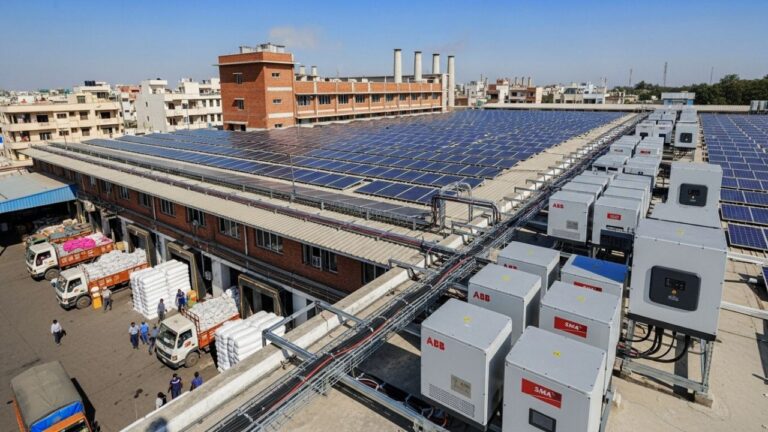
Solar inverters, a crucial component of photovoltaic (PV) systems, convert direct current generated by solar panels into alternating current suitable for electricity grids. While often overlooked compared to solar modules, inverters play a central operational and digital role in modern energy systems. According to the Commission, the EU’s overwhelming reliance on a limited number of Chinese suppliers creates systemic risks that extend far beyond energy markets.
A New EU Economic Security Doctrine Takes Shape
The Commission’s warning is part of a broader economic security doctrine designed to make the European Union more resilient to external shocks. The strategy reflects growing awareness that economic openness must be balanced with safeguards against over-dependence on foreign suppliers in sensitive sectors.
In the document, Brussels identifies six immediate high-risk priority areas that will guide policy action in the coming years:
- Reducing strategic dependencies in essential goods and services
- Attracting safe and trusted investment within the EU
- Supporting European defense, space, and critical industrial sectors
- Strengthening European leadership in key technologies
- Protecting sensitive data and digital systems
- Securing critical infrastructure, including energy networks
Within this framework, solar inverters are highlighted as a clear example of a risky dependency, underscoring the intersection between renewable energy, digital infrastructure, and national security.
Read Also: The Sun Bank: How Future Generations Will Deposit Energy Instead of Money
Why Solar Inverters Are a Security Issue
The Commission’s concern is not about solar power itself, but about the digital control layer embedded within modern inverter technology. Today’s inverters are not passive devices; they are highly connected systems capable of remote monitoring, software updates, and grid interaction.
Several risks are associated with this reality:
- High supplier concentration, with Chinese manufacturers dominating the market
- Cybersecurity vulnerabilities, including potential remote access or manipulation
- Access to sensitive grid data, such as load patterns and operational behavior
- Supply chain infiltration, where compromised components could affect grid stability
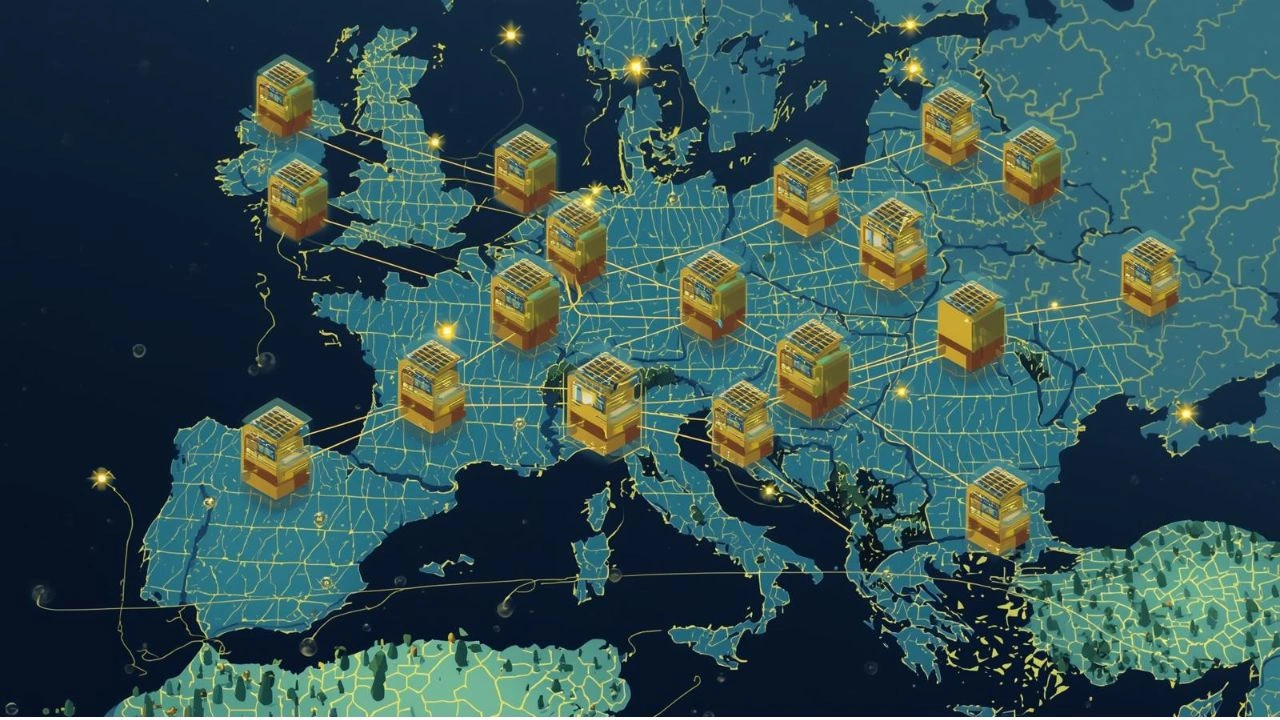
Currently, nearly 80% of photovoltaic installations in Europe rely on inverters of Chinese origin, according to the Commission. This level of concentration raises alarms about what could happen if geopolitical tensions escalate or if vulnerabilities are exploited at scale.
Cybersecurity and the Power Grid: A Growing Intersection
Europe’s electricity grids are becoming increasingly digitalized. Smart grids, distributed energy resources, and real-time balancing systems rely on constant data exchange between generators, consumers, and grid operators.
In this environment, solar inverters function as gateways between renewable generation and the grid. If compromised, they could theoretically:
- Disrupt grid frequency and voltage stability
- Enable unauthorized access to grid control systems
- Be used in coordinated cyberattacks targeting critical infrastructure
- Create large-scale outages through synchronized manipulation
The European Commission stresses that these risks are not hypothetical. As cyber threats become more sophisticated, any widely deployed, remotely accessible device connected to critical infrastructure must be treated as a potential attack vector.
NIS2 Directive: The First Line of Defense
To address these vulnerabilities, Brussels plans a coordinated assessment under the NIS2 Directive, which is a cornerstone of the EU’s cybersecurity framework. NIS2 significantly expands the scope of cybersecurity obligations for operators of essential and important entities, including those in the energy sector.
The Commission has announced that this assessment, expected next year, will examine:
- Supply chain risks related to inverter manufacturers
- Cybersecurity practices and governance structures
- Jurisdictional risks linked to supplier countries
- Technical vulnerabilities and software update mechanisms
The results are expected to lead to mitigation measures aimed at improving preparedness among grid operators, developers, and equipment suppliers.
Role of the Cyber Resilience Act and Net Zero Industry Act
Beyond NIS2, the Commission intends to leverage other regulatory tools to reduce high-risk dependencies. These include:
- The Cyber Resilience Act (CRA), which introduces mandatory cybersecurity requirements for digital products sold in the EU
- Certification and standardization schemes, ensuring minimum security benchmarks
- Non-price criteria under the Net Zero Industry Act, allowing governments to consider security and resilience—not just cost—when approving projects
Together, these measures could significantly reshape procurement decisions in Europe’s renewable energy sector, shifting focus away from lowest-cost solutions toward trusted and secure technologies.
Beyond Inverters: Other Critical Dependencies Identified
Solar inverters are not the only area of concern highlighted in the Commission’s document. Brussels also flags several other strategic dependencies that pose risks to the EU’s economic and security interests, including:
- Common semiconductors, which are essential for nearly all modern technologies
- Battery electric vehicles (BEVs) and their supply chains
- Key components for drones, with implications for defense and surveillance
- Detection and monitoring equipment used at the EU’s external borders
The inclusion of these sectors underscores a broader trend: technology and security are now inseparable, and dependencies in one area can have cascading effects across the economy.
Monitoring Foreign Subsidies and Market Distortions
The Commission also signals its intention to closely monitor market developments, particularly the role of foreign subsidies in distorting competition. Subsidized imports, especially in the solar sector, have long been a contentious issue in Europe.
According to the document, Brussels will continue assessing how state-backed foreign manufacturers may undermine European industry by offering equipment at prices that do not reflect true production costs. This scrutiny could lead to further trade defense measures or regulatory interventions.
Industry Response: ESMC Welcomes the Shift
The European Solar Manufacturing Council (ESMC) has welcomed the Commission’s strategic shift, expressing strong support for the new guidelines. The organization sees the doctrine as long overdue recognition of the risks posed by unchecked dependencies.
ESMC particularly praised the Commission’s commitment to:
- Supporting the development of trusted suppliers for critical sub-components
- Strengthening manufacturing capacity within the EU
- Partnering with safe third countries to diversify supply chains
The council emphasized that European and Western manufacturers remain technological leaders and have the capacity to meet Europe’s demand if provided with the right policy support.
Call for a European Whitelist of Trusted Suppliers
Among its key proposals, the ESMC is calling for the creation of a European whitelist of reliable inverter suppliers. This list would be based on:
- Cybersecurity standards
- Jurisdictional and legal risk assessments
- Transparency and governance requirements
The whitelist could be integrated into major regulatory frameworks such as NIS2, the ICT Supply Chain Toolkit, the Net Zero Industry Act, and EU network codes.
Importantly, the council argues that member states should have the authority to deny grid connection to equipment from suppliers deemed high-risk, reinforcing national and regional energy security.
A Wake-Up Call for Member States
Christoph Podewils, Secretary General of the ESMC, described the Commission’s doctrine as a critical wake-up call for EU governments.
“Member States must now undertake a massive reduction in dependencies and cyber risks,” he warned, urging immediate action rather than gradual adjustments. According to Podewils, delaying decisions could expose Europe to unacceptable risks as renewable penetration continues to rise.
Strengthening Europe’s Digital and Energy Resilience
In response to these challenges, the ESMC has launched a dedicated forum on inverters, storage, and energy management systems. The initiative is open to ESMC members as well as eligible non-member Western stakeholders.
The forum aims to collaborate with:
- Grid operators
- Energy security agencies
- Standards and certification bodies
- Policymakers and regulators
Its goal is to develop practical solutions that enhance Europe’s digital resilience while supporting the energy transition.
Earlier Warnings and National Security Concerns
This is not the first time concerns have been raised about inverter security. As early as May, the ESMC warned that unregulated remote control features in some non-European inverters could undermine energy sovereignty.
In September, the Czech National Cyber and Information Security Agency assessed that the use of Chinese solar inverters in small power plants posed a potential national security threat, further reinforcing the Commission’s concerns.
These warnings illustrate a growing consensus among European institutions and national authorities: energy infrastructure can no longer be separated from cybersecurity and geopolitics.
Read Also: NTPC Commissions 359.58 MW Solar Capacity, Strengthening India’s Clean Energy Push
Balancing the Energy Transition with Security
Europe’s push toward renewable energy remains essential for climate goals, energy independence, and long-term economic stability. However, the Commission’s document makes it clear that the energy transition must also be a secure transition.
As solar and wind power become pillars of Europe’s electricity system, the technologies that enable them must meet the highest standards of trust, transparency, and resilience.
Conclusion: A Turning Point for Europe’s Solar Supply Chain
The European Commission’s warning on Chinese solar inverters marks a turning point in EU energy and industrial policy. By openly acknowledging the risks of over-dependence, Brussels is laying the groundwork for a more balanced, secure, and diversified renewable energy ecosystem.
The coming years will determine whether Europe can successfully reduce strategic vulnerabilities while continuing to scale clean energy at speed. What is clear is that solar inverters—once seen as simple hardware—are now firmly recognized as critical digital infrastructure at the heart of Europe’s energy future.
Related Posts