India clean energy growth 2025: India sets a powerful global example with its biggest-ever clean-energy expansion, adding 31.25 GW in one year.
India’s clean-energy revolution has reached an unprecedented milestone this financial year, marking a historic leap toward a greener and more sustainable power future. With rapid solar growth, large-scale renewable investments, and ambitious policy drives, the country is now cementing itself as one of the world’s key players in the global shift toward non-fossil energy.
A Historic Leap in India’s Energy Transition
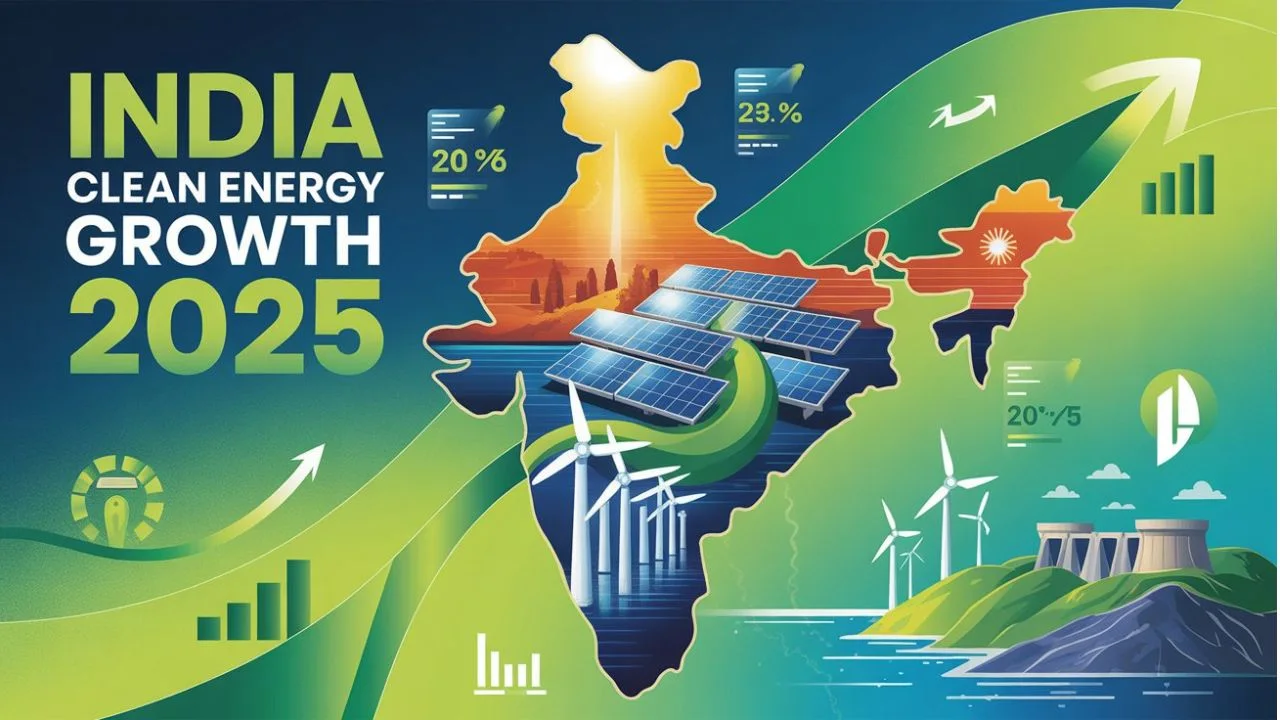
India has officially added 31.25 GW of non-fossil fuel power capacity in FY26, the highest annual increase ever recorded in the country’s history. This massive achievement, announced by Union Minister for New and Renewable Energy Pralhad Joshi, highlights India’s accelerating commitment to reducing carbon dependency and expanding clean energy infrastructure.
The standout figure within this impressive growth is the 24.28 GW added from solar power alone, illustrating how solar energy has become the backbone of India’s renewable expansion. The remaining additions come from wind, small hydro, biomass, and other green technologies that collectively contribute to the country’s rising clean-power capacity.
This milestone reflects not only a year of exceptional execution but also a decade-long transformation driven by policy reforms, declining renewable technology costs, and a growing national focus on sustainability.
Read Also: Solar Farm Investment in 2025: A Complete Guide to Profiting from Clean Energy
Solar Energy Leads the Charge With Explosive Growth
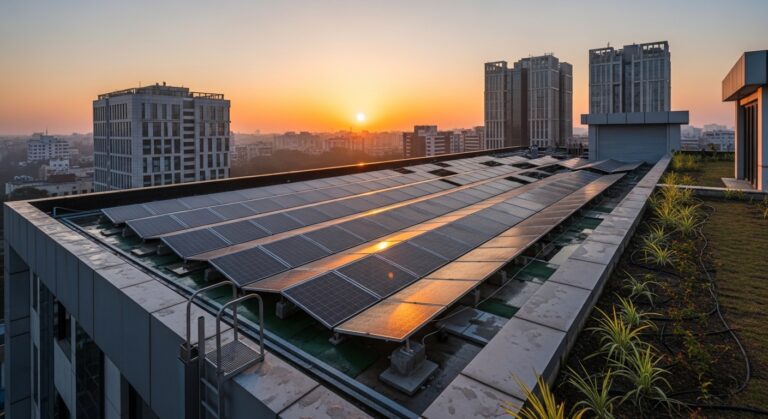
One of the most defining features of India’s clean-energy journey is the exponential rise of solar power. Barely 11 years ago, India had just 2.8 GW of solar capacity. Today, that figure has soared to around 130 GW, representing over 4,500% growth and positioning India among the world’s leading solar markets.
Between 2022 and 2024 alone, India added 46 GW of solar capacity, becoming the third-largest global contributor to solar growth during that period. This explosive rise has been powered by:
- Massive solar parks in states like Rajasthan, Gujarat, and Tamil Nadu
- Rapid rooftop solar adoption
- Competitive tariff-based tenders
- Increasing domestic manufacturing of solar modules
- Government incentives under schemes like PLI and Kusum
The solar energy boom has helped India significantly lower clean-energy costs, making solar one of the cheapest sources of electricity in the country. This cost advantage continues to drive both public and private-sector investments, strengthening India’s renewable foundation.
India’s Rising Influence in Global Renewable Energy
At the Global Energy Leaders Summit 2025 (GELS 2025) in Odisha, Minister Pralhad Joshi emphasized India’s growing impact on the worldwide renewable landscape. While the global community took 70 years to install its first 1 terawatt of renewable energy, the journey from 1 TW to 2 TW took just two years, thanks to accelerated global adoption — and India played a pivotal role in this rapid expansion.
India’s contributions to global clean-energy growth include:
- One of the world’s largest solar capacity expansions
- Increasing wind installations driven by coastal states
- Strong policy commitments like the 500 GW non-fossil target by 2030
- Growing investments in green hydrogen, pumped hydro, and battery storage
By scaling renewable installations at record speeds, India is not only decarbonizing its own future but also emerging as a central driver of global clean-energy transformation.
Rooftop Solar Gains Momentum With PM Surya Ghar Yojana
In addition to utility-scale projects, the Indian government is now prioritizing household-level clean-energy adoption. During the summit, the Minister announced a new initiative under the PM Surya Ghar: Muft Bijli Yojana, involving a Utility-Led Aggregation (ULA) model.
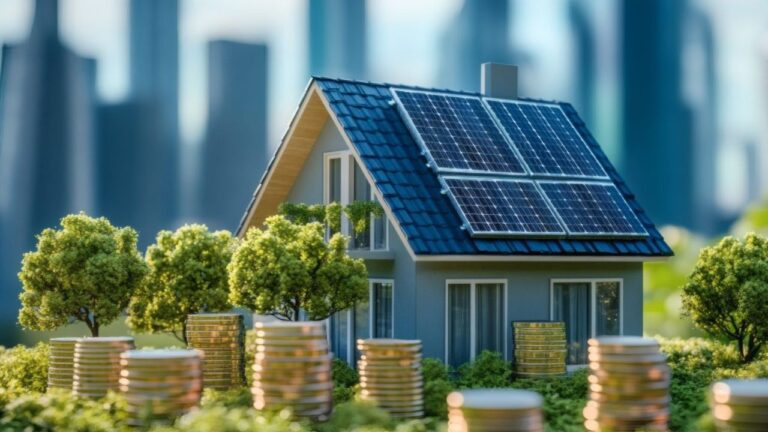
Under this model, the government aims to install 1.5 lakh rooftop solar units across Odisha. This initiative is expected to benefit 7–8 lakh people, particularly families from lower-income communities. The ULA model is designed to make rooftop solar affordable and accessible by allowing power utilities to manage procurement, installation, and maintenance while ensuring quality standards.
By empowering households to generate their own electricity, India is:
- Reducing domestic power costs
- Increasing energy independence
- Lowering pressure on state grids
- Creating green jobs
- Expanding decentralized clean-energy access
This move also aligns with India’s broader push toward achieving mass household electrification through renewable sources.
Accelerating Clean-Energy Infrastructure Across States
The record 31.25 GW addition is not an isolated achievement — it is the result of coordinated nationwide efforts. Several states have significantly contributed to this clean-energy surge, driven by availability of land, solar irradiance, wind corridors, and progressive state-level policies.
Major Contributors to Clean-Energy Growth
- Rajasthan: Largest solar capacity among all states
- Gujarat: Leader in rooftop and distributed solar
- Tamil Nadu: Wind power hub of India
- Karnataka: Strong in both solar and hybrid parks
- Maharashtra & Andhra Pradesh: Growing renewable participation through hybrid projects
The development of massive renewable projects across these states is supported by enhanced transmission infrastructure under the Green Energy Corridor project, enabling seamless transfer of clean power across regions.
Clean Energy and India’s Economic Future
India’s rapid clean-energy expansion is not just an environmental mission — it is also a powerful economic strategy. Renewable growth is shaping India’s future in multiple ways:
1. Boosting Green Jobs
The renewable sector is creating thousands of new jobs across installation, manufacturing, R&D, and maintenance.
2. Attracting Global Investments
International companies and funds are increasingly investing in India’s solar, wind, and storage projects.
3. Strengthening Energy Security
With rising fossil-fuel prices and import dependency, clean energy offers cost stability and energy independence.
4. Supporting Industrial Growth
Low-cost renewable power is becoming a key factor in attracting industries, especially in sectors like green hydrogen and EV manufacturing.
5. Reducing Pollution
Cleaner energy directly impacts air quality improvements and lowers carbon footprints across cities.
India’s strong renewable momentum is expected to fuel economic resilience while supporting climate commitments under the Paris Agreement.
Read Also: How To Choose The Best Solar Panel Installers Near Me 2026 Guide
What Lies Ahead for India’s Clean-Energy Roadmap?
With this year’s milestone, India is clearly on track to achieve — and potentially exceed — its 2030 target of 500 GW non-fossil fuel capacity. Upcoming areas of focus include:
- Green Hydrogen Mission
- Advanced battery storage systems
- Solar-wind hybrid parks
- Pumped hydro storage
- Grid modernization and digitalization
- Expansion of domestic manufacturing under ‘Make in India’
Moreover, India’s commitment to renewable energy is expected to draw growing collaboration from global partners, private investors, and scientific communities.
The path ahead is transformative — a shift not only in how electricity is produced but also in how it is consumed, distributed, and integrated into India’s economic and social systems.
A Greener, More Empowered India
This landmark addition of 31.25 GW of clean-energy capacity marks more than a statistical achievement — it represents a national commitment to building a greener, healthier, and more secure future for the coming generations.
As renewable energy becomes more accessible and affordable, India is poised to lead by example, proving that economic growth and environmental responsibility can progress hand in hand. The country’s bold stride in FY26 is a powerful indicator of what lies ahead — a cleaner, stronger, and globally influential India.
Related Posts