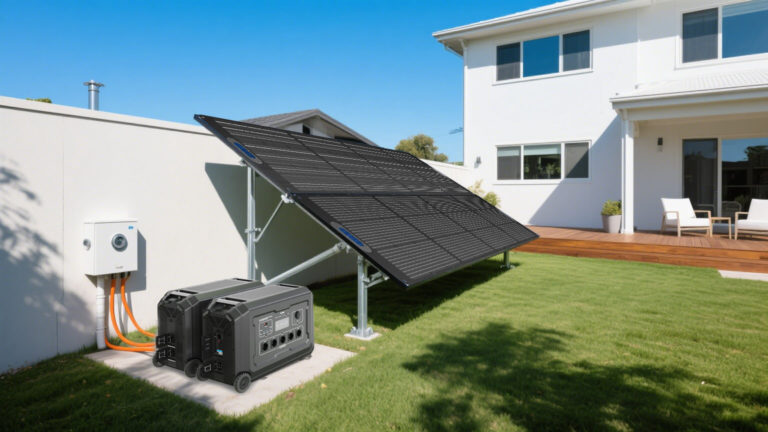
If your Texas business is still paying full commercial electricity rates, you’re leaving serious money on the table. The federal Investment Tax Credit (ITC) covers 30% of your solar installation cost — and most Texas businesses see full payback in under 5 years. Here’s everything you need to know.
Why Texas businesses are going solar right now
Texas has some of the highest commercial electricity rates in the South, and those rates have climbed over 18% since 2021. Meanwhile, solar panel costs have dropped by more than 70% over the last decade. That gap is exactly why commercial solar adoption in Texas has surged — it’s not an environmental statement anymore, it’s a straightforward business decision.
Add in ERCOT’s volatile grid (which has cost businesses millions in unexpected outages and demand charges), and solar-plus-storage starts looking less like an upgrade and more like essential infrastructure.
The 30% federal investment tax credit explained
The Inflation Reduction Act extended and expanded the solar Investment Tax Credit (ITC) through at least 2032. For commercial properties, this means a direct 30% credit against your federal tax liability — not a deduction, a credit. On a $500,000 installation, that’s $150,000 back in your pocket.
Important deadline
The full 30% ITC is available for systems placed in service through 2032. Projects in certain low-income or energy communities may qualify for an additional 10–20% adder. Don't wait — approval timelines and installer capacity in Texas are tightening.
| Incentive | Type | Value | Who qualifies |
|---|---|---|---|
| Federal ITC | Tax credit | 30% of system cost | All US commercial businesses |
| MACRS depreciation | Accelerated depreciation | Up to 85% in Year 1 | Businesses with tax liability |
| Bonus depreciation | Federal depreciation | 60% in 2024 | Most commercial entities |
| USDA REAP grant | Cash grant | Up to 50% of cost | Rural businesses & ag |
| Austin Energy rebat |
What a free ROI analysis actually shows you
A quality commercial solar ROI analysis isn’t a pamphlet — it’s a financial model built around your actual utility bills, your roof or land footprint, your tax situation, and local grid data. Here’s what a proper analysis covers:
| Analysis component | What it tells you |
|---|---|
| 12-month energy audit | Your baseline consumption and peak demand patterns |
| System sizing model | Optimal kW capacity for your facility |
| Year 1 savings projection | Estimated utility bill reduction from Month 1 |
| 25-year cash flow model | Cumulative savings, payback year, and total return |
| Tax incentive breakdown | ITC + MACRS impact on your specific tax situation |
| Financing scenarios | Cash purchase vs. loan vs. PPA comparison |
| Grid outage risk value | Cost of downtime avoided with battery backup option |
How to choose the right Texas commercial solar company
Not all installers are created equal. Texas has seen a wave of out-of-state solar companies enter the market with no local roots, no licensed electricians on staff, and no track record. Here’s what to look for when vetting a commercial solar partner:
| Factor | What to look for | Red flag |
|---|---|---|
| Licensing | Texas TDLR electrical contractor license | Subcontracting all electrical work |
| Experience | 5+ years, 100+ commercial installs in Texas | Primarily residential portfolio |
| Warranty | 25-yr panel, 10-yr workmanship, 12-yr inverter | Shorter or missing workmanship warranty |
| Financing | Relationships with multiple lenders + PPA options | Single-lender lock-in |
| References | Verifiable local commercial clients | Testimonials only, no contact info |
| Monitoring | Real-time production monitoring included | No ongoing performance tracking |
Industries seeing the fastest solar ROI in Texas
While virtually any commercial property benefits from solar, certain sectors in Texas are seeing payback periods well under five years due to high daytime consumption that aligns with peak solar production hours:
Manufacturing facilities, cold-storage warehouses, retail centers, hotels and hospitality, agricultural operations, and healthcare clinics consistently top the list. If your operation runs heavy HVAC loads, refrigeration, or production equipment during daylight hours, your ROI timeline shortens considerably.
Frequently asked questions
How much does commercial solar cost in Texas?▼
Can I claim the 30% ITC if I finance the system?▼
How long does commercial solar installation take in Texas?▼
Does Texas have a net metering program for businesses?▼
What size solar system does my Texas business need?▼
Is battery storage worth adding for Texas commercial properties?
Related Posts