
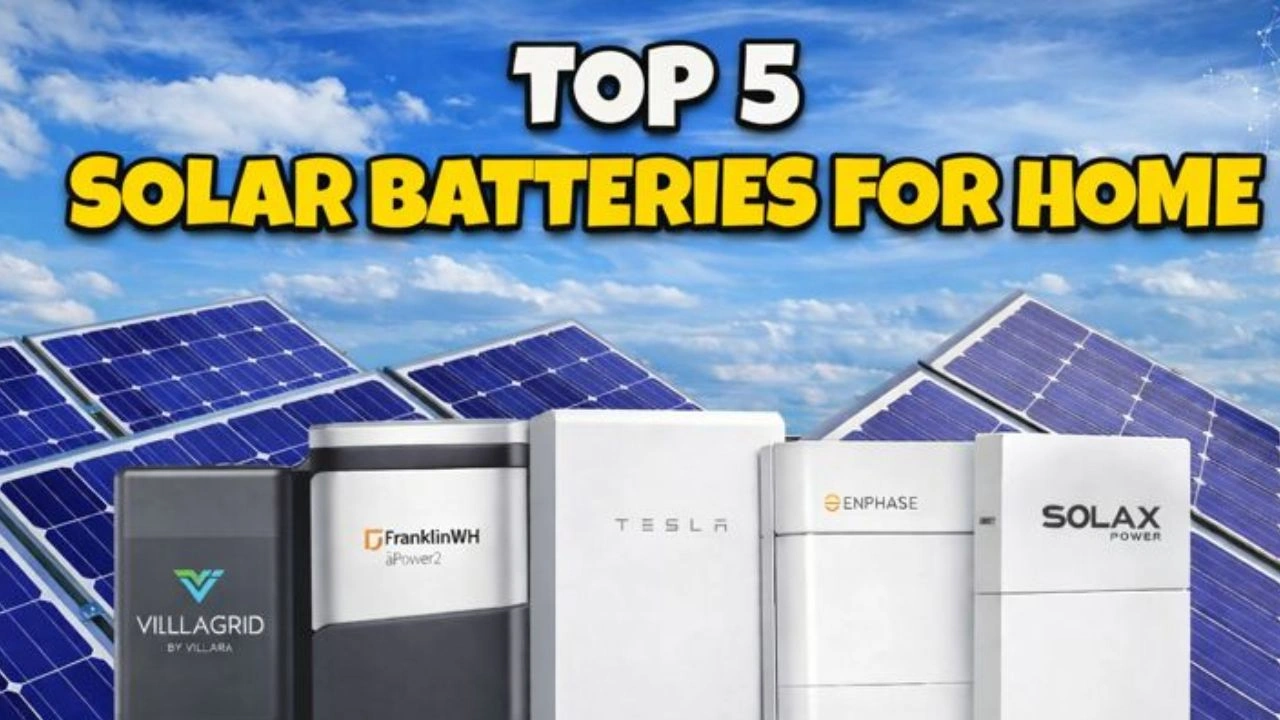
If you plan to add battery storage to a solar PV system in 2026, this guide explains the key features to compare, the trade-offs you should expect, and the leading battery systems that suit different needs — from budget installs to high‑control, expandable platforms.
Why pick a modern home battery?
Home batteries store solar energy for use after sunset, reduce grid imports during peak rates, and can supply power during outages. Newer systems also vary widely in efficiency, expandability, software control and EV integration, so the choice affects long‑term performance and upgrade costs.
What to compare before you buy
- Usable capacity: The amount of energy you can actually draw from the battery (kWh). Match this to your evening and overnight consumption.
- Continuous and peak power: Maximum power the battery can deliver (kW). Important for running multiple appliances or full‑home backup.
- Round‑trip efficiency: Percentage of stored energy you get back. Higher efficiency means less loss and more value from stored kWh.
- Inverter architecture: AC‑coupled systems include their own inverters, while DC‑coupled systems sit between panels and the inverter. AC designs are easier to retrofit; modular systems often use multiple microinverters.
- Modularity and expandability: Can you add storage in small steps or only by installing another full system? Expansion affects long‑term cost and grid paperwork.
- Battery management and thermal control: Active heating/cooling and smart thermal algorithms extend usable life and protect capacity in extreme temperatures.
- Software and user control: Automation, export limits, time‑of‑use scheduling and third‑party integrations change how you manage energy and savings.
- Safety and certifications: Fire protection layers, shutdown mechanisms and local regulatory approvals are essential for safe installation.
- Warranty terms: Check years, guaranteed retained capacity and any cycle or throughput limits.
- Installer network and support: Local support and installer experience materially affect reliability and warranty service.
Read Also: Photovoltaic Systems in Hotels: Milleproroghe 2025 Opportunity for Italy’s Hospitality Sector
Top battery picks for 2026 — who each is best for
Below are five widely used systems that reflect different priorities: budget simplicity, high efficiency, dependable support, broad automation, and maximum flexibility.
1. Sig Energy Sigen Store — best overall flexibility and expandability
Why choose it: Modular architecture, wide inverter range and deep software control make this system ideal for owners who want future upgrades, EV integration and full customisation.
- Modular storage: Mix 6 kWh and 9.1 kWh modules; most inverters accept up to six modules.
- Inverter range: Single‑phase inverters from small to large (for example 3 kW to 12 kW), with large PV input capacity.
- Backup and EV features: Optional backup gateway for whole‑home resilience and an EV DC charger module that charges EVs from battery DC with lower conversion loss.
- Software: Built‑in AI for profit, self‑consumption or export optimisation and extensive user scripting/third‑party integration for advanced control.
- Best for: Tech‑savvy owners, homes planning EV DC charging or staged expansion without repeating grid approvals.
2. Tesla Powerwall 3 — best for polished automation and thermal management

Why choose it: Strong thermal control, simple automation and standardised, easy expansion via add‑on storage packs.
- Usable capacity: Around 13.5 kWh per unit.
- Inverter options: Multiple continuous power choices (suitable for a variety of homes).
- Thermal management: Predictive conditioning reduces performance loss in very cold or hot weather.
- Expansion: Add raw battery expansion packs (no inverter) for more storage without a full second inverter — simpler than installing an entire additional system, but expansion units are fixed sizes.
- Software: Highly automated; limited manual override for some advanced user requests.
- Warranty: Typically a 10‑year warranty with a retained capacity guarantee (for example around 80% after warranty period depending on terms).
- Best for: Homeowners who want a turn‑key, well‑engineered solution with minimal configuration and strong climate handling.
3. Alpha ESS G3 — best for quiet reliability and UK support
Why choose it: Strong warranty support and a high‑voltage design that delivers efficient conversion and dependable performance.
- Battery modules: Options that suit smaller or larger storage needs; modular modules can be combined.
- Inverter choices: Multiple inverter sizes (for example 3.68 kW, 5 kW and 8 kW) that suit typical UK homes.
- Safety: Layered fire protection and outdoor suitability with active heating.
- Customer support: Strong local presence and high customer satisfaction scores in markets with established support networks.
- Best for: Households that prioritise robust manufacturer backing and reliable day‑to‑day operation.
4. Enphase IQ Battery 5P — best for highest round‑trip efficiency
Why choose it: Very efficient modular AC architecture with microinverter elements that scale power as modules are used.
- Usable capacity: About 5 kWh per unit.
- Power behaviour: Microinverters activate in stages, so stored energy is converted with minimal loss and available power scales with installed modules.
- Warranty: Long manufacturer warranty durations are common.
- Limitations: No active battery heating; performance can be limited in sub‑zero environments unless installed indoors or suitably protected.
- Best for: Owners for whom every kWh of stored energy must be reclaimed efficiently — good for tight budgets on space or where high efficiency drives ROI.
5. Fox Evo 10 — best budget choice for straightforward homes
Why choose it: Affordable, simple all‑in‑one units that do the job in typical properties without complex configuration.
- Usable capacity: Close to 10 kWh per unit.
- Inverter options: Multiple inverter sizes to match common household needs.
- Simplicity: All‑in‑one design reduces installation complexity and component count.
- Trade‑offs: Expansion usually requires installing a whole new unit and corresponding grid paperwork; the app can be basic for advanced users.
- Best for: Homeowners who want straightforward storage without advanced integrations or staged upgrades.
Read Also: 3kW solar system cost Tamil Nadu
How to choose the right battery for your home — a short checklist
- Estimate evening energy need: Add up kWh used between sunset and bedtime plus overnight usage — this gives a baseline battery size.
- Decide backup importance: If you need whole‑home backup, choose an inverter and battery rated to handle peak loads and a dedicated backup gateway.
- Check expansion plans: If you might add EV charging, heat pumps or more panels later, favour modular systems that let you add capacity in small steps.
- Consider installer experience: Choose a product with strong local installer support and a track record in your market.
- Read the warranty details: Look for years, retained capacity guarantees and any cycle or throughput limits that affect long‑term performance.
- Account for climate: If you live in cold or hot regions, prefer systems with active thermal management or ensure indoor installation.
- Evaluate software needs: If you plan complex automations, choose a system that exposes APIs or third‑party integrations; if you prefer “set and forget”, pick strong automation instead.
Common pitfalls and things to watch
- Expansion requiring grid consent: Some expansions need distribution network approval. Confirm whether adding storage later will require paperwork or new hardware.
- App limitations: A polished app does not always equal deep control. Check whether you can set export limits, manual charge schedules and firmware updates.
- Warranty fine print: Warranties may specify retained capacity after a set number of years, or limit claims based on cycles or energy throughput.
- Operating temperature: Systems without heaters can shut down in freezing temperatures; look for active heating if outdoor installation is intended in cold climates.
- Hidden upgrade costs: Adding power capability often means new inverters or additional hardware on some systems; modular platforms can be cheaper to expand.
- Overrating round‑trip efficiency: Manufacturer figures are useful but check independent test data where possible — small differences compound across years.
Quick FAQ
Can a battery be added to an existing solar array?
Yes. AC‑coupled batteries are easiest to retrofit. DC‑coupled options may be more efficient but typically require additional inverter or system changes. Installer assessment is essential.
How large should my battery be?
Match usable capacity to your typical evening and overnight consumption. A simple formula: average hours of post‑solar usage × average kW use = desired usable kWh. Add margin for grid outages if backup is needed.
Is bidirectional vehicle‑to‑home charging widely usable?
Hardware and software are available on some platforms, but local grid rules may prevent commercial use of vehicle‑to‑grid currently. If this feature matters, confirm the system’s readiness and regulatory status.
Does higher efficiency always save money?
Generally yes — less energy loss means more usable kWh from each charge. Efficiency is most important where stored energy is expensive or solar export prices are low.
Final takeaway
There is no single best battery for every home. Select a system that matches your priorities: low cost and simplicity, top efficiency, robust support, automated “fit‑and‑forget” convenience, or modular flexibility for future upgrades. Pay attention to usable capacity, power rating, thermal design, software control and whether expansion will require additional hardware or grid approval. Careful matching of those factors will protect your investment and maximise savings over the lifetime of the system.
Use the checklist above to compare quotes and verify warranty and support details before signing contracts. The .right choice today should still serve you well as electric heating and vehicle charging become more common
Related Posts


2 thoughts on “Top Home Solar Batteries 2026 — Capacity, Power & Expandability”