
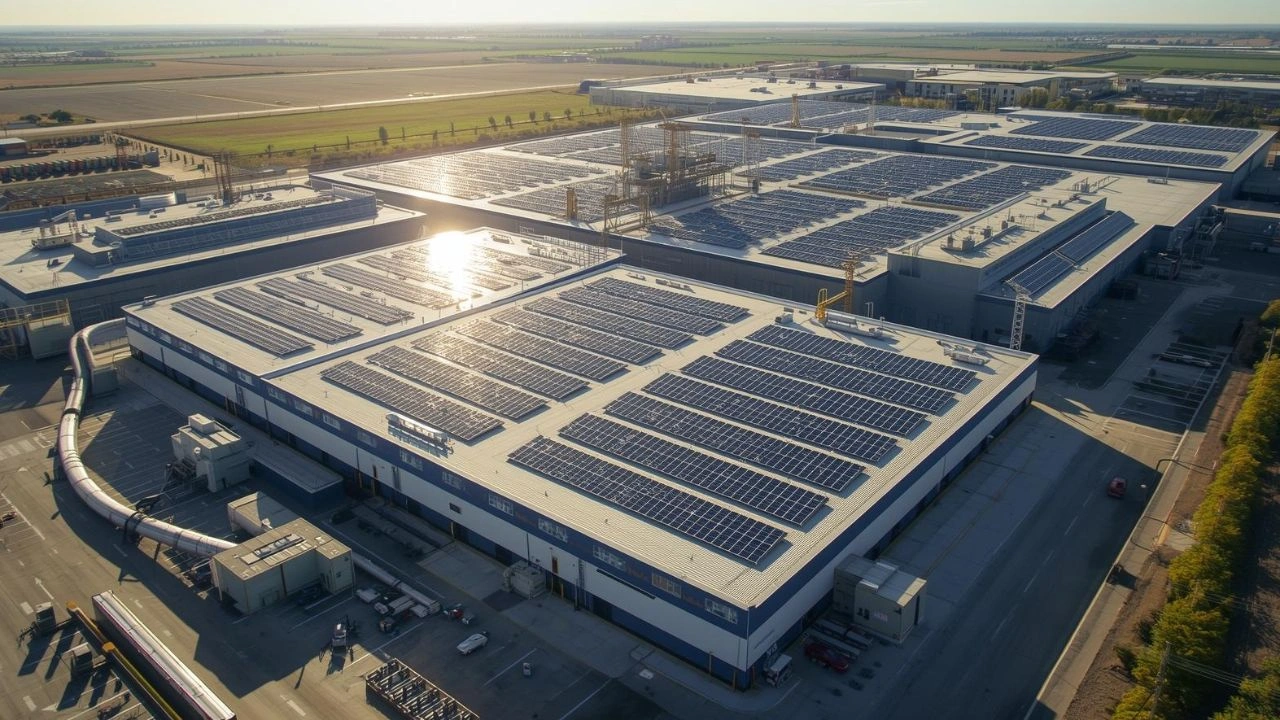
cost of installing solar for factories: Understanding factory solar installation costs helps manufacturers reduce energy expenses, improve sustainability, and secure long-term competitiveness globally.
The rising cost of electricity, pressure to meet sustainability targets, and government incentives are pushing factories worldwide to adopt solar power. However, the cost of installing solar for factories varies significantly depending on system size, location, technology, and financial structure. This article explains the real costs involved, hidden variables, long-term returns, and how industrial solar installations are transforming manufacturing economics.
The Growing Need for Solar Energy in the Manufacturing Sector
Factories are among the largest energy consumers in any economy. Heavy machinery, continuous production cycles, and climate control systems demand uninterrupted power, making electricity costs a major operational expense.
As grid tariffs rise and fossil fuel volatility increases, solar energy offers factories a stable, predictable, and scalable power solution. Industrial solar installations not only reduce monthly electricity bills but also strengthen brand credibility by aligning with ESG and carbon-reduction goals.
Today, solar is no longer an experimental investment—it is a strategic infrastructure decision for factories aiming at long-term profitability.
Average Cost of Installing Solar for Factories
The cost of installing solar for factories typically ranges from $0.6 to $1.2 per watt, depending on country, scale, and component quality. For clarity:
- Small factories (100 kW system): $60,000 – $120,000
- Medium factories (500 kW system): $300,000 – $550,000
- Large factories (1 MW system): $600,000 – $1.1 million
These figures include solar panels, inverters, mounting structures, wiring, and installation. However, actual costs vary due to multiple technical and regulatory factors, which we explore below.
Read Also: The Sun Bank: How Future Generations Will Deposit Energy Instead of Money
Key Factors That Influence Factory Solar Installation Costs
System Capacity and Energy Consumption
Factories consume power at scale, and larger systems reduce per-unit costs due to economies of scale. A 1 MW system costs significantly less per watt than a 100 kW system.
Energy audits play a crucial role here. Oversizing increases capital costs, while undersizing limits savings. The optimal system is designed to match peak load and operational hours.
Type of Solar Installation: Rooftop vs Ground-Mounted
Rooftop solar systems are the most common choice for factories with large shed-style buildings. They reduce land costs and use existing infrastructure.
Ground-mounted solar plants are more expensive due to land preparation, civil work, and fencing but allow higher capacity and better panel orientation.
Rooftop systems generally cost 10–20% less than ground-mounted installations.
Solar Panel Technology and Quality
Factories usually choose between:
- Monocrystalline panels – Higher efficiency, higher cost
- Polycrystalline panels – Lower cost, slightly reduced efficiency
- Bifacial panels – Higher yield, higher upfront investment
While premium panels cost more initially, they deliver higher lifetime energy output, which is critical for factories operating 20–25 years.
Inverter Selection and Power Electronics
Industrial solar systems require high-capacity string or central inverters, which account for 8–12% of total system cost.
Factories running sensitive machinery often opt for advanced inverters with grid stabilization, surge protection, and monitoring, increasing reliability but also cost.
Structural Strength and Roof Condition
Older factory roofs may require reinforcement or replacement before solar installation. This structural work can add 5–15% extra cost.
A structural audit is essential to ensure long-term safety and compliance with industrial standards.
Grid Connectivity, Net Metering, and Compliance Costs
Factories connected to the grid must comply with local utility regulations, which may include:
- Net metering setup
- Transformer upgrades
- Protection relays
- Synchronization equipment
These grid-related expenses vary by region but can add $5,000 to $50,000 to large installations.
Despite the added cost, grid connectivity enables factories to export excess power and maximize ROI.
Labour, Engineering, and Project Management Costs
Industrial solar projects require skilled labor, including electrical engineers, safety officers, and project managers.
Labor and EPC (Engineering, Procurement, Construction) costs usually make up 10–15% of total installation cost, depending on system complexity and site conditions.
Well-managed projects reduce downtime and ensure compliance with industrial safety norms.
Government Incentives and Tax Benefits for Factories
Many governments encourage factory solar adoption through:
- Capital subsidies
- Accelerated depreciation
- Investment tax credits
- GST/VAT benefits
- Carbon credit monetization
These incentives can reduce effective project costs by 20–40%, dramatically improving payback periods.
Factories should work with financial advisors to structure solar investments tax-efficiently.
Operating and Maintenance Costs Over Time
Solar systems have low running costs. For factories:
- Annual maintenance cost: 1–2% of project cost
- Panel cleaning, inverter servicing, monitoring
- Minimal manpower required
Compared to diesel generators or grid dependency, solar offers exceptional operational cost stability.
Return on Investment and Payback Period
Factories typically achieve:
- Payback period: 3 to 6 years
- System lifespan: 25+ years
- Internal Rate of Return (IRR): 15–25%
Once payback is achieved, solar electricity is essentially free power for decades, protecting factories from tariff hikes and energy uncertainty.
Financing Models That Reduce Upfront Costs
Factories do not always need to invest full capital upfront. Popular models include:
- CAPEX model – Factory owns the system
- OPEX / PPA model – Third party owns, factory buys power
- Lease financing – Monthly payments instead of lump sum
OPEX models allow factories to install solar with zero upfront cost, making renewable energy accessible even for SMEs.
Environmental and Brand Value Benefits
Beyond cost savings, factory solar installations deliver:
- Lower carbon footprint
- Compliance with global sustainability standards
- Improved investor confidence
- Stronger ESG reporting
Many global buyers now prefer sourcing from solar-powered factories, making renewable energy a competitive advantage.
Read Also: NTPC Commissions 359.58 MW Solar Capacity, Strengthening India’s Clean Energy Push
Common Mistakes Factories Should Avoid
Factories often make costly mistakes such as:
- Choosing lowest-price vendors over quality
- Ignoring future expansion capacity
- Skipping structural assessments
- Underestimating compliance costs
A well-designed system prioritizes long-term performance over short-term savings.
The Future of Solar Power in Industrial Manufacturing
As battery storage costs decline and smart grids expand, factories will move toward energy independence.
Hybrid systems combining solar, storage, and AI-based energy management will soon become standard, turning factories into power producers, not just consumers.
Solar is no longer optional—it is becoming a core pillar of industrial strategy.
Related Posts


2 thoughts on “Cost of Installing Solar for Factories”