Switching to solar energy is no longer just an environmental decision—it’s a smart financial move. With electricity prices rising and government incentives expanding, more homeowners in the United States are turning to solar power. However, the upfront cost of installing solar panels can be high. That’s where solar loans come in.
In this comprehensive guide, you’ll learn everything about solar loans, including how they work, the best options available, interest rates, and tips to save money.
🔋 What Are Solar Loans?
Solar loans are financing options that allow homeowners to install solar panel systems without paying the full cost upfront. Instead, you repay the loan in monthly installments, similar to a home or car loan.
These loans are specifically designed for renewable energy projects and often come with better terms compared to traditional loans.
💡 Why Choose Solar Loans?
Here are the main reasons why solar loans are becoming popular:
✔️ Affordable Installation
You don’t need thousands of dollars upfront.
✔️ Immediate Savings
Start saving on electricity bills right away.
✔️ Increase Home Value
Solar-powered homes often sell at higher prices.
✔️ Tax Benefits
You can qualify for federal tax credits and incentives.
Read Also : Solar Panel Installers
🏦 Types of Solar Financing Options
1. Secured Solar Loans
- Backed by your home or property
- Lower interest rates
- Longer repayment terms
2. Unsecured Solar Loans
- No collateral required
- Faster approval
- Slightly higher interest rates
3. Home Equity Loans (HELOC)
- Use your home equity
- Very low interest rates
- Risk of losing home if unpaid
4. Solar Leasing
- No ownership
- Monthly rent-like payments
- Limited savings
📊 Solar Loans vs Solar Lease
| Feature | Solar Loan | Solar Lease |
| Ownership | Yes | No |
| Tax Benefits | Yes | No |
| Monthly Savings | Higher | Lower |
| Long-term Value | High | Moderate |
👉 Conclusion: Solar loans are usually the better option for long-term savings.
💰 Solar Loan Interest Rates (2026)
Interest rates vary depending on your credit score and lender:
- Excellent Credit: 3% – 5%
- Average Credit: 5% – 8%
- Low Credit: 8% – 12%
💡 Tip: Always compare lenders before choosing.
🏡 How Much Do Solar Panels Cost?
Average solar system cost in the USA:
- Small system: $10,000 – $15,000
- Medium system: $15,000 – $25,000
- Large system: $25,000+
With solar loans, you can install systems with $0 down payment.
🌎 Government Incentives for Solar Loans
The US government supports solar adoption through incentives:
🇺🇸 Federal Solar Tax Credit (ITC)
- Up to 30% tax credit
- Applies to installation cost
🏠 State Incentives
- Rebates
- Net metering
- Property tax exemptions
Read Also : renewable energy loan
🧾 How to Apply for a Solar Loan
Follow these steps:
- Check your credit score
- Compare solar loan providers
- Get solar installation quotes
- Apply online or through installer
- Review terms carefully
- Approve and install
🏆 Best Solar Loan Providers (USA)
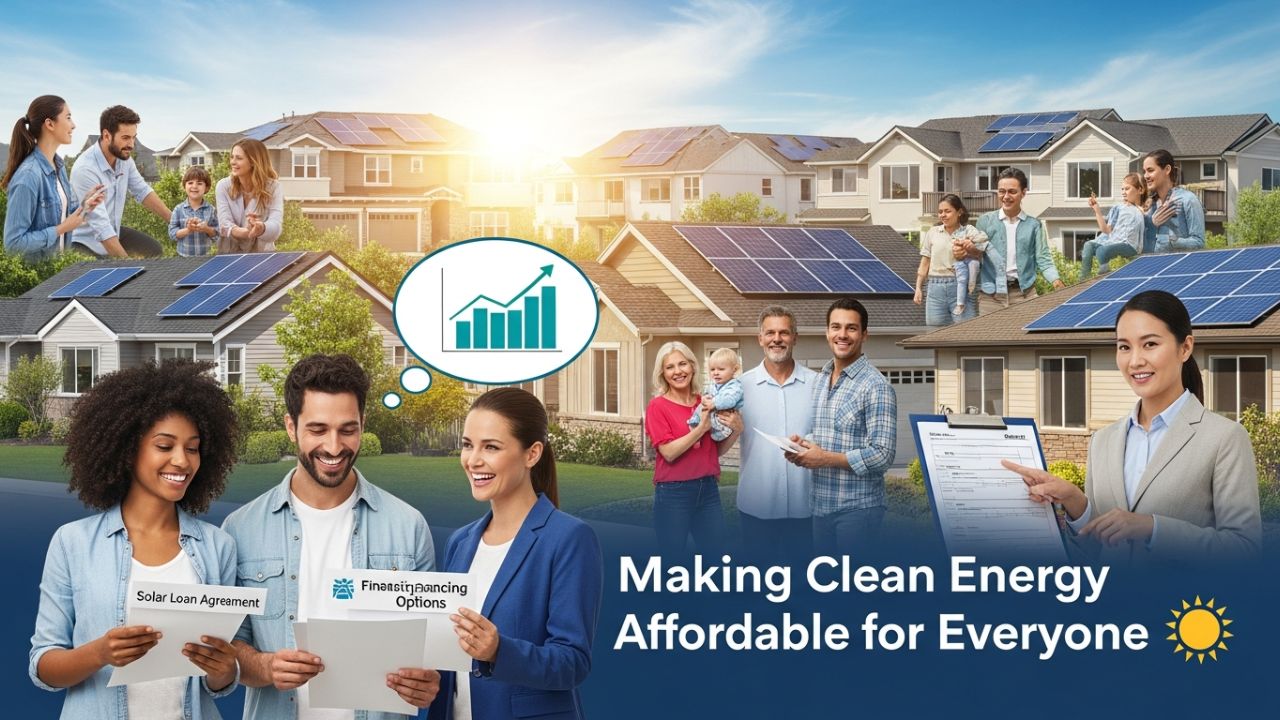
Top companies offering solar financing:
⚠️ Things to Consider Before Taking a Solar Loan
- Interest rates
- Loan term (5–25 years)
- Hidden fees
- Prepayment penalties
- Warranty and maintenance
📈 Is a Solar Loan Worth It?
Yes, in most cases.
You can:
- Save thousands on electricity
- Increase home value
- Reduce carbon footprint
- Gain energy independence
🔮 Future of Solar Financing
By 2030, solar energy is expected to dominate residential power in many parts of the US. Solar loans will become even more accessible, with lower interest rates and better incentives.
✅ Final Thoughts
Solar loans make renewable energy accessible to everyone. Instead of waiting years to afford solar panels, you can start today and pay over time while enjoying immediate savings.
If you choose the right financing option, solar energy can be one of the smartest investments you ever make.
Related Posts