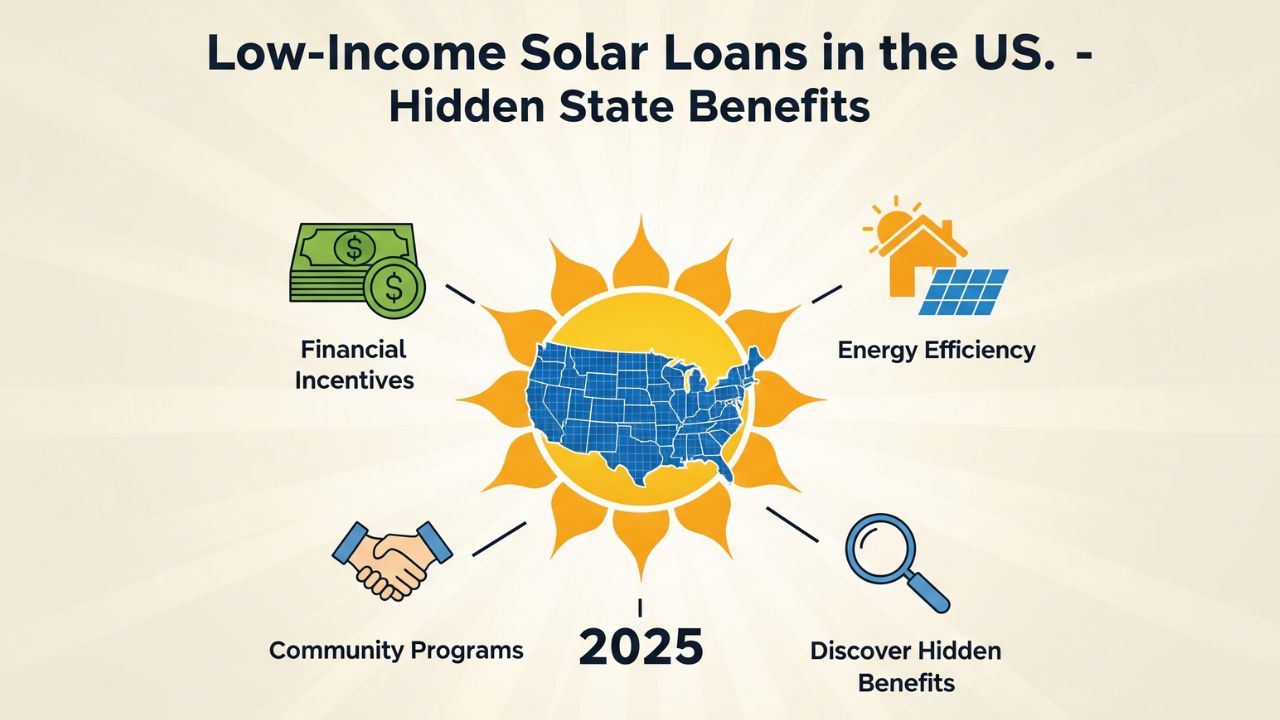
As the clean-energy transition accelerates in the United States, one of the most overlooked developments is the rise of state-level solar loans, rebates, and credit programs built specifically for low-income households. While federal incentives like the Investment Tax Credit (ITC) dominate public awareness, the real financial game changers are happening quietly at the state and utility level—where targeted incentives can slash the cost of solar by thousands of dollars and help underserved communities reap substantial long-term savings.
This comprehensive guide dives deep into the high-impact state programs, loan structures, rebates, bill credits, and hidden benefits you may not know exist—valuable information for homeowners, renters, policy watchers, and anyone following the growth of renewable energy in disadvantaged communities.
Why States Are Investing Heavily in Low-Income Solar
The clean-energy shift is no longer just an environmental movement—it’s also an issue of economic fairness and energy affordability.
Millions of American households struggle with:
- Rising electricity bills
- Energy insecurity
- Limited access to traditional financing
- Outdated or energy-inefficient housing infrastructure
Solar power offers a long-term solution, but the upfront cost barrier has historically locked out the families who need it most. That’s why nearly every U.S. state now operates, funds, or partners in solar access programs that prioritize low-income residents.
The goal is clear:
Make solar affordable, accessible, and financially beneficial for underserved households.
1. State-Level Low-Income Solar Loans: How They Work and Why They’re a Game Changer
Many states have introduced low-interest, zero-interest, or deferred-payment solar loan programs tailored to households meeting specific income thresholds.
Key Advantages of These Programs
✔ Lower Interest Rates
Unlike traditional private loans—which may carry high APRs—state programs often reduce costs dramatically with interest rates between 0% and 4%.
✔ No or Minimal Credit Requirements
Many states use credit enhancements or risk-pooling to help those who lack strong credit history.
✔ Deferred Repayment Options
In some programs, households pay nothing until the solar system starts generating bill savings.
✔ Flexible Terms
Terms of 10–20 years make payments manageable even for tight budgets.
Examples of State-Backed Loan Innovations
- Colorado’s RENU Loan Program offers low-interest financing with extended terms, requiring no home equity.
- New York’s Green Jobs–Green New York (GJGNY) program offers on-bill financing, letting customers repay loans through their utility bill with no minimum credit score.
- California’s Solar on Multifamily Affordable Housing (SOMAH) funds solar for low-income renters and provides guarantees that bill savings exceed loan payments.
These programs ensure that solar becomes a net financial benefit, not a cost burden.
Read Also: Global Solar Tax Credits: Country-by-Country Incentive Guide
2. Newly Expanded Solar Rebates: State Programs Offering Massive Upfront Savings
Another high-value opportunity comes from state and utility-level solar rebate programs, which reduce installation costs immediately—no waiting for tax season.
These rebates can be surprisingly generous.
States Offering High-Value Solar Rebates for Low-Income Homes
- Massachusetts SMART Program pays additional per-kWh incentives to systems serving low-income customers.
- Illinois Solar for All (ILSFA) covers up to 100% of installation costs for eligible households.
- Maryland’s Low-Income Solar Grant Program provides grants covering 50% or more of the project cost.
Why These Rebates Matter
Rebates:
- Lower the total loan amount
- Reduce payback periods
- Increase net savings
- Make solar possible for households with limited cash flow
Some homeowners combine state rebates + federal ITC + utility bill credits, leading to out-of-pocket costs close to zero.
3. Little-Known Solar Credits That Boost Savings Even Further
Beyond rebates, some states offer additional credits unique to low-income participants, dramatically compounding savings.
Examples of State-Level Solar Credits
★ Low-Income Solar Energy Credits (LISECs)
Offered in states like California and Colorado, these credits may:
- Add bonus payments per kWh generated
- Increase credit value for households in disadvantaged zones
- Provide direct utility bill reductions
★ Net Billing & Net Metering Enhancements
Many states give preferential export rates to low-income solar owners, boosting the value of excess energy sold back to the grid.
★ Community Solar Bill Credits
For renters and apartment dwellers, community solar is a lifeline.
Low-income subscribers often receive:
- Guaranteed discounts (20%–50%)
- Priority enrollment
- Additional state-funded bill credits
States like New York, Minnesota, Illinois, and Colorado lead in this category, with federal funding now expanding community solar across the U.S.
4. Property Tax Exemptions and Hidden Local Incentives That Most People Overlook
Property tax laws can make or break solar affordability. Thankfully, many states have exemptions that protect low-income households from unintended costs.
Types of Property Tax Breaks
- Ad valorem exemptions: Solar system value is excluded from property tax assessments.
- Sales tax exemptions: Systems are exempt from state sales tax at purchase.
- Special low-income carveouts: Some regions offer additional exemptions for households in lower income brackets.
Examples of States Offering Strong Tax Protections
- Texas: 100% property tax exemption on solar installations.
- Rhode Island: Comprehensive property and sales tax exemptions.
- New Mexico: Multiple tax credits and exemptions for low-income residents installing clean energy systems.
These protections ensure that solar only reduces costs, never increases them.
5. Utility-Sponsored Solar Programs Designed for Low-Income Households
Many electric utilities—not just states—operate programs that deliver meaningful savings to low-income families.
Utility Incentive Types
- Direct solar installation grants
- On-bill financing with zero down
- Guaranteed bill savings
- Weatherization + solar bundle programs
- Free energy audits
The utility industry is gradually shifting from a traditional revenue model to a grid-as-a-service philosophy, where supporting distributed solar reduces infrastructure costs and grid strain.
For low-income households, these programs can:
- Eliminate upfront costs
- Provide predictable monthly savings
- Strengthen home energy stability
6. Why Low-Income Solar Programs Are Essential for Economic and Environmental Equity
Energy Burden Reduction
Low-income households pay a disproportionately high percentage of income toward electricity. Solar reduces that burden permanently.
Environmental Justice
Solar adoption in disadvantaged communities reduces exposure to pollution from fossil-fuel energy sources.
Long-Term Financial Stability
Lower utility bills can reduce financial hardship, prevent energy shutoffs, and improve household budgeting.
Community Resilience
Solar—especially paired with batteries—creates stronger neighborhoods during outages and emergencies.
States know that clean energy is no longer a luxury.
It is a fundamental tool for protecting vulnerable families.
Read Also: Perovskite Solar Cell Efficiency: The Future of Solar Energy and Smart Investment Opportunities
7. The Future: More Funding, Bigger Incentives, and Stronger State Support
Federal policies like the Inflation Reduction Act (IRA) have supercharged state programs by providing:
- Bonus tax credits for low-income areas
- Community solar support
- Funding for state energy offices
- Grants for tribes and underserved communities
As these funds filter into states, expect:
- Larger rebate pools
- More low-income loan options
- Increased community solar projects
- Expanded bill credit programs
- New incentives for energy storage
The next five years may bring the largest expansion of low-income solar access in U.S. history.
Conclusion: Low-Income Solar Programs Are Reshaping Energy Affordability in the U.S.
What many households don’t realize is that solar is now more financially accessible than ever—especially in low-income communities.
Across the country, families are reducing or even eliminating their electric bills through:
- State-backed loans
- High-value rebates
- Bonus energy credits
- Community solar subscriptions
- Utility incentives
- Tax exemptions
The result is a powerful shift toward affordable, equitable, and sustainable energy for millions of Americans.
If you or someone you know is interested in going solar, exploring your state’s low-income programs is one of the smartest financial decisions you can make.
Related Posts

2 thoughts on “Low-Income Solar Loans in the U.S. – Hidden State Benefits 2025”