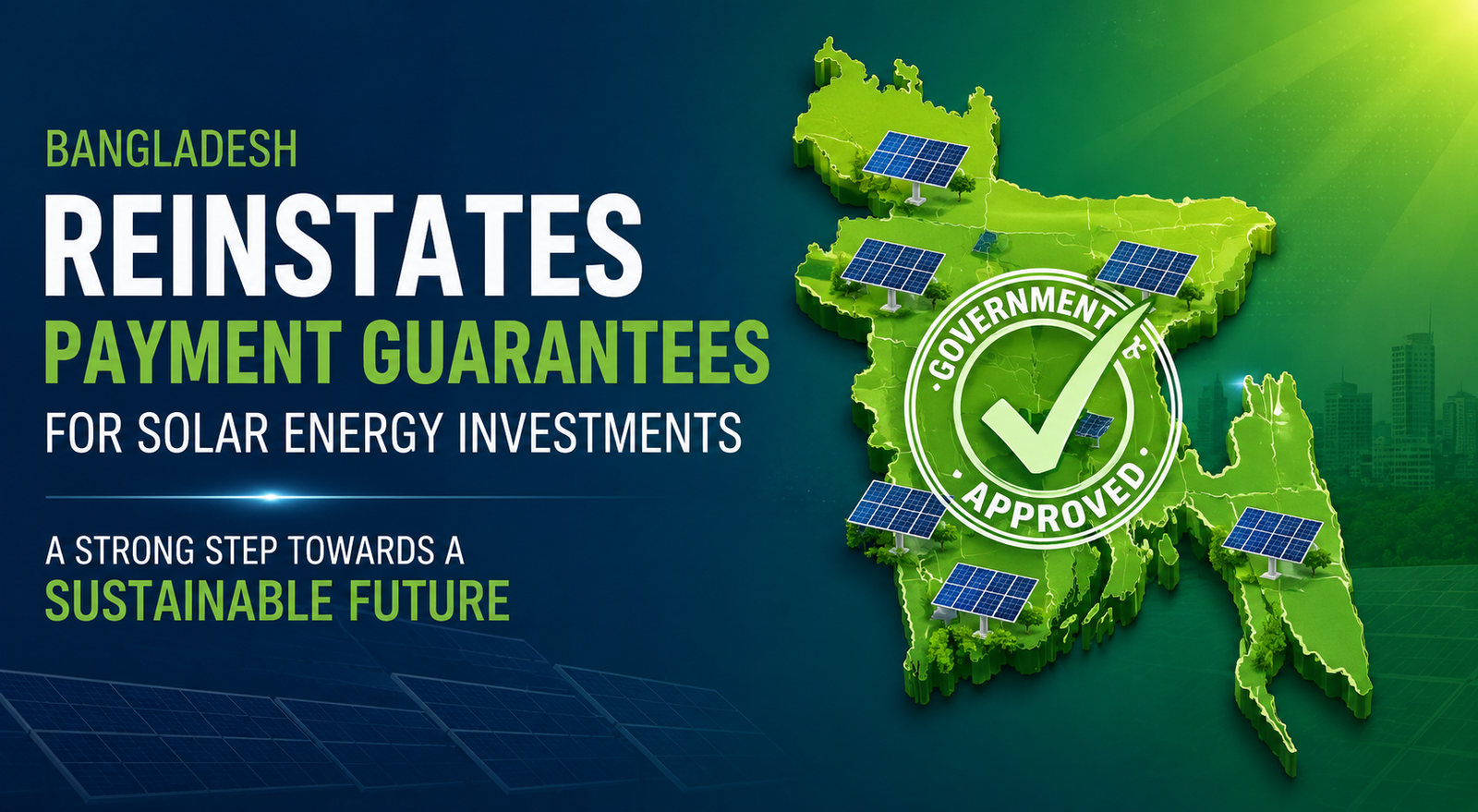
In a significant move to boost investor confidence and tackle a deepening power crisis, the government of Bangladesh has reinstated payment guarantees for renewable energy projects. The decision, announced in August 2026, reverses a policy from the previous administration that had effectively deterred investment in the country’s struggling solar sector.
For two years, the absence of a government-backed guarantee left project developers and financiers uncertain about payment for electricity supplied to the grid. Industry stakeholders say this paralysis has cost the country dearly, delaying crucial clean energy capacity and contributing to widespread power outages that have crippled industry and caused immense hardship.
This guide explains the new policy, its importance for Bangladesh’s energy future, and what it means for developers and the global solar market.
The Policy Change: What Has Been Reinstated?
The Bangladesh government has restored the provision of payment guarantees for renewable energy projects, specifically for Independent Power Producers (IPPs).
- The Mechanism: The Power Division signs a payment guarantee with the IPP on behalf of the government. This guarantee is a commitment that the state-owned Bangladesh Power Development Board (BPDB) will pay for the electricity generated.
- Why It Matters: This guarantee is the single most critical element for a project’s bankability. Without it, local and international banks are highly reluctant to provide the project financing needed to build a solar plant.
- The Directive: The Power Division issued a formal directive to the BPDB to include these payment guarantees in all future tender documents for renewable energy projects.
Read Also: Commercial Solar Panel Installation USA: Costs, Benefits & ROI Guide 2026
Why This Decision Is Crucial for Bangladesh
The reinstatement is a direct response to a severe and worsening energy crisis.
The Root of the Problem
Bangladesh has faced acute power shortages for years, leading to:
- Factory Shutdowns: The industrial sector, a backbone of the economy, has suffered from unreliable power.
- Job Losses: Factory closures have led to significant unemployment.
- Increased Power Cuts: Citizens have faced daily blackouts.
- Economic Hardship: The crisis has slowed economic growth and created immense social pressure.
Industry leaders, like Mostafa Al Mahmud, president of the Bangladesh Sustainable and Renewable Energy Association (BSREA), have been vocal. “That could have helped lessen the ongoing power crisis, which led to factory shutdowns, job losses, increased power cuts, and immense suffering among people,” he told pv magazine.
Solar’s Untapped Potential
Bangladesh has significant solar potential, but its development has lagged. The previous government’s decision to scrap payment guarantees in 2024 had a chilling effect, stopping many projects in their tracks. This new policy is an attempt to reverse that trend and finally unlock this potential.
Industry Reaction: A “Positive Signal” for Investors
The response from the renewable energy sector has been overwhelmingly positive. The policy change is seen as a necessary first step to restoring confidence.
- Improved Bankability: Ezaz Al Qudrat A Mazid, managing director of Solar EPC Development Ltd, stated that the initiative “would improve project bankability, strengthen lender confidence and make it easier to attract both local and international investment to the sector.”
- Unlocking New Projects: He noted it is “a positive signal for developers, financiers, and technology partners committed to Bangladesh’s clean energy transition,” and will help unlock new renewable energy projects.
- A Call for Further Reform: The industry is now calling for additional measures, including the immediate removal of duties on all solar power equipment, including battery storage systems.
The Importance of Payment Guarantees in Project Finance
For solar IPPs, the payment guarantee is not a luxury; it is a necessity. Here is why:
- Financing Condition: Large solar farms cost tens of millions of dollars. They are typically financed with 70-80% debt from banks. Banks will only lend if they are confident of repayment.
- Reducing Risk: A government guarantee significantly reduces the “off-taker risk”—the risk that the state utility (BPDB) will fail to pay its bills.
- Lowering Costs: A lower perceived risk translates to lower interest rates on loans, making the project cheaper and more competitive.
What This Means for the South Asian Solar Market
Bangladesh’s decision is a critical signal for other developing nations facing energy crises.
- A Model for Policy: It demonstrates the importance of stable, clear, and investor-friendly policies for attracting renewable energy investment.
- Meeting Climate Goals: Unlocking solar is essential for Bangladesh to meet its climate commitments and transition away from expensive and polluting fossil fuels.
- Regional Impact: A successful solar boom in Bangladesh could provide a model for other countries in the region with similar grid and financial challenges.
Read Also: Texas Commercial Solar: 30% Tax Credit, ROI, and How to Choose the Right Installer
The Bottom Line
Bangladesh’s reinstatement of solar payment guarantees is a crucial and welcome policy correction. By reducing financial risk for developers, it aims to unlock much-needed investment in solar energy, providing a powerful tool to combat the country’s severe power crisis.
While it is a first step, the government’s commitment to bankable projects is essential for attracting the private capital needed to build a sustainable, reliable, and clean energy future for Bangladesh. The coming months will show if this policy translates into new solar capacity and relief for its people and industries.
Author: Solar Facts India Team
This analysis is based on a policy announcement by the Bangladesh government and market reaction as of August 2026. It is for informational purposes only and does not constitute professional financial or investment advice. For our full disclaimer, please visit our Disclaimer page.
Related Posts