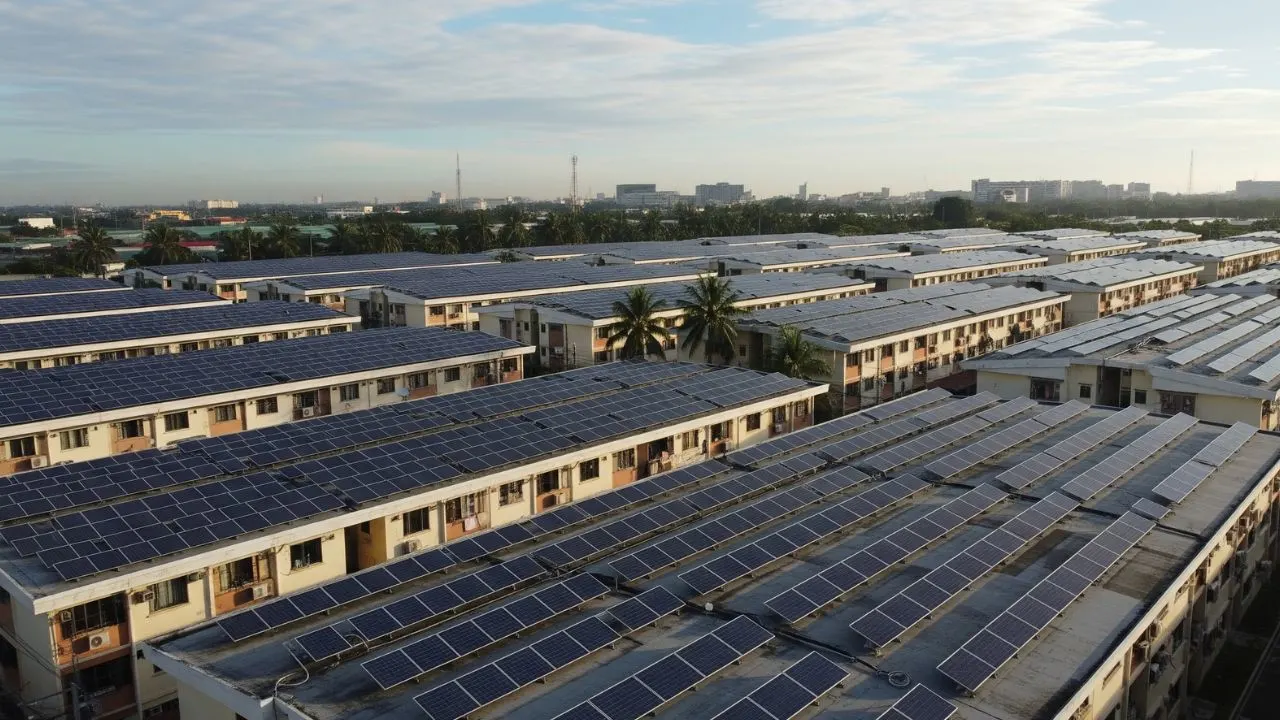
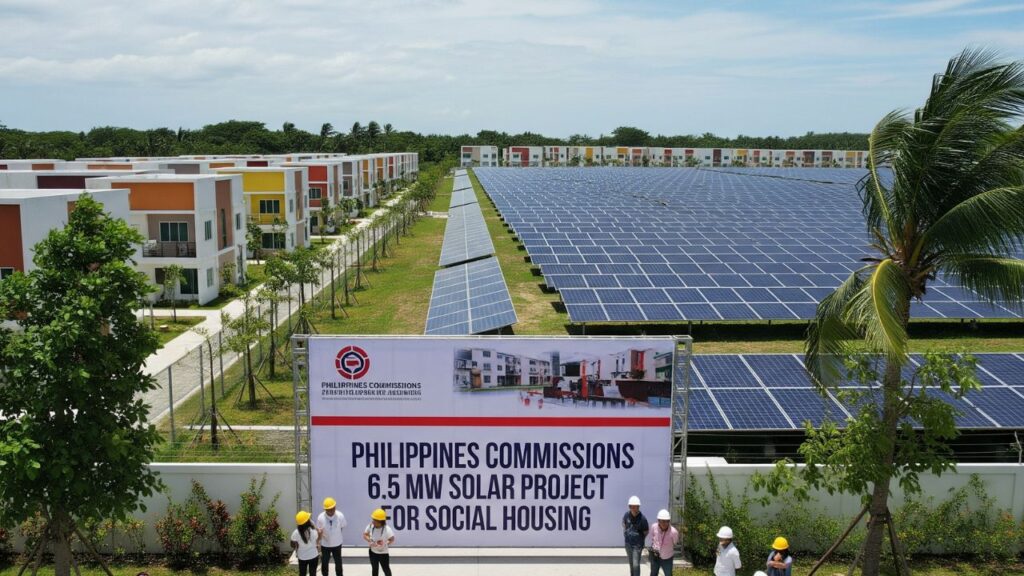
Philippines solar project: The Philippines launches a pioneering 6.5 MW solar project powering social housing communities, advancing national clean energy and uplifting vulnerable families.
The Philippine government has commissioned a ground breaking 6.5-megawatt solar project exclusively designed for social housing, marking one of the most significant steps in Southeast Asia toward clean energy accessibility for low-income communities. This transformational initiative merges sustainability, affordability, and inclusivity—ensuring that the nation’s shift toward renewable energy benefits not just industries, but also the marginalized families who need assistance the most.
A Historic Renewable Energy Milestone for the Philippines
The inauguration of the 6.5 MW solar project represents a turning point in the Philippines’ renewable energy ambitions. For years, the government has been advocating energy reforms that focus on sustainability; however, this project stands out as a direct solution for rising electricity costs, energy insecurity, and inequality in impoverished communities.
By prioritizing social housing sectors, the government acknowledges that clean energy must serve all Filipinos—not just urban elites or corporations. This project serves as a model for inclusive, socially driven energy development.
The initiative is also aligned with the country’s commitments under the National Renewable Energy Program (NREP) and the Philippine Development Plan, both emphasizing decarbonization and nationwide green electrification.
Read Also: The Inflation Reduction Act (IRA) Solar Incentives: What Homeowners Must Know in 2025
Transforming Social Housing: Power, Dignity, and Relief for Low-Income Families
One of the most compelling impacts of the project is its direct benefit to thousands of families residing in government-supported housing communities. These communities often struggle with:
- High electricity bills
- Limited access to reliable power
- Exposure to environmental risks
By installing solar infrastructure in these housing zones, the government is not only reducing financial burdens but also improving the quality of life for vulnerable populations.
Key Benefits for Residents:
- Lower monthly electric bills, reducing dependence on grid power
- Stable and reliable energy, especially during outages
- Eco-friendly living environments, promoting long-term health benefits
- Increased property value, as green homes become more desirable
This marks a new chapter in the Philippines’ efforts toward energy equity—ensuring every citizen, regardless of income, enjoys access to sustainable power.
How the 6.5 MW System Works: Technology Behind the Transformation
The newly commissioned solar system is built using state-of-the-art photovoltaic (PV) modules, advanced inverters, and highly efficient distribution infrastructure. Its total capacity of 6.5 megawatts enables it to produce significant clean energy output that can sustainably power thousands of households.
Core Features of the Project:
- High-efficiency monocrystalline PV panels
- Smart inverter technology to regulate voltage and maximize output
- Battery-ready system design, enabling future storage integration
- Weather-resistant mounting structures to endure typhoons and humidity
- Optimized grid connectivity for stable distribution across communities
The system is engineered for maximum durability, a crucial requirement considering the Philippines’ vulnerability to extreme weather conditions.
Boosting Climate Resilience in Typhoon-Prone Regions
Given the Philippines’ position along the Pacific Ring of Fire and its exposure to more than 20 typhoons annually, climate resilience is a foundational goal of this project. Solar facilities built within social housing zones will:
- Reduce dependency on fragile, storm-sensitive grid lines
- Enable communities to maintain essential power during crises
- Support relief operations through decentralized energy production
By incorporating durable solar systems and climate-proof engineering, the government is preparing low-income families for a safer, more resilient future.
Economic Upliftment Through Renewable Energy Adoption
Beyond environmental benefits, the 6.5 MW solar project boosts economic opportunities for residents and local workers. Construction, installation, and maintenance activities foster green job creation—a critical component of the Philippines’ economic recovery plan.
Economic Advantages Include:
- Local employment generation during and after installation
- Reduced electricity expenses, increasing household savings
- New micro-business potential as communities gain reliable power
- Government cost savings in long-term energy subsidies
This project brings the Philippines closer to becoming a regional leader in sustainable development and renewable job growth.
Supporting National Goals: A Step Toward 35% Renewable Share by 2030
The Philippines has committed to achieving 35% clean energy in its electricity mix by 2030 and 50% by 2040. The commissioning of the 6.5 MW solar project contributes directly to these targets.
Powered by large-scale renewable energy infrastructure, the nation aims to combat rising fossil fuel import costs—which currently burden the economy—and shift toward self-sufficient energy systems.
By pioneering renewable initiatives that reach grassroots communities, the Philippines is setting a strong example for other developing nations seeking inclusive energy transitions.
A Model for Future Affordable Housing Projects Across Southeast Asia
The success of this project has sparked interest from neighboring Southeast Asian nations. As urban populations grow and housing demand rises, the integration of renewable energy into affordable housing could become the standard for future policy across the region.
The Philippines’ model demonstrates that:
- Renewable energy can be integrated into public housing affordably
- Clean energy improves living conditions
- Government-led initiatives can balance social welfare and sustainability
This positions the Philippines as a thought leader in the global movement toward eco-friendly housing solutions.
Environmental Impact: A Major Reduction in Carbon Emissions
Solar projects of this scale significantly reduce carbon footprints. The 6.5 MW system is expected to offset:
- Thousands of tons of CO₂ annually
- Heavy reliance on coal-fired plants
- Long-term environmental degradation in nearby regions
By reducing emissions, the project directly contributes to pollution control, improved air quality, and healthier living conditions for future generations.
Empowering Women and Local Communities
Renewable energy projects often serve as platforms for empowering women in engineering, maintenance, and community leadership roles. This initiative encourages:
- Women-led solar training programs
- Community participation in energy management
- Youth involvement in sustainable development practices
With government and NGO partnerships, the solar project promotes inclusive growth and strengthens community ownership.
Read Also: The Sun Bank: How Future Generations Will Deposit Energy Instead of Money
Challenges in Implementation and How They Were Overcome
Large-scale solar implementation in social housing comes with logistical and technical hurdles. Key challenges include:
- Limited space for solar deployment
- Grid integration issues
- Maintenance training gaps
- Material transport disruptions due to weather
The project overcame these through innovative solutions:
- Designing rooftop-integrated solar layouts
- Using compact high-efficiency panels
- Establishing local maintenance teams
- Installing weather-resistant infrastructure
These strategies make the project replicable and scalable nationwide.
Future Expansion: From Social Housing to Public Infrastructure
After the successful commissioning of this 6.5 MW system, officials are exploring expansions into:
- Public schools
- Hospitals
- Government buildings
- Transport terminals
Integrating solar into public infrastructure will accelerate the Philippines’ transition toward clean and independent energy.
Related Posts

2 thoughts on “Philippines Commissions 6.5 MW Solar Project for Social Housing: A Historic Step Toward Clean Energy Equity”