
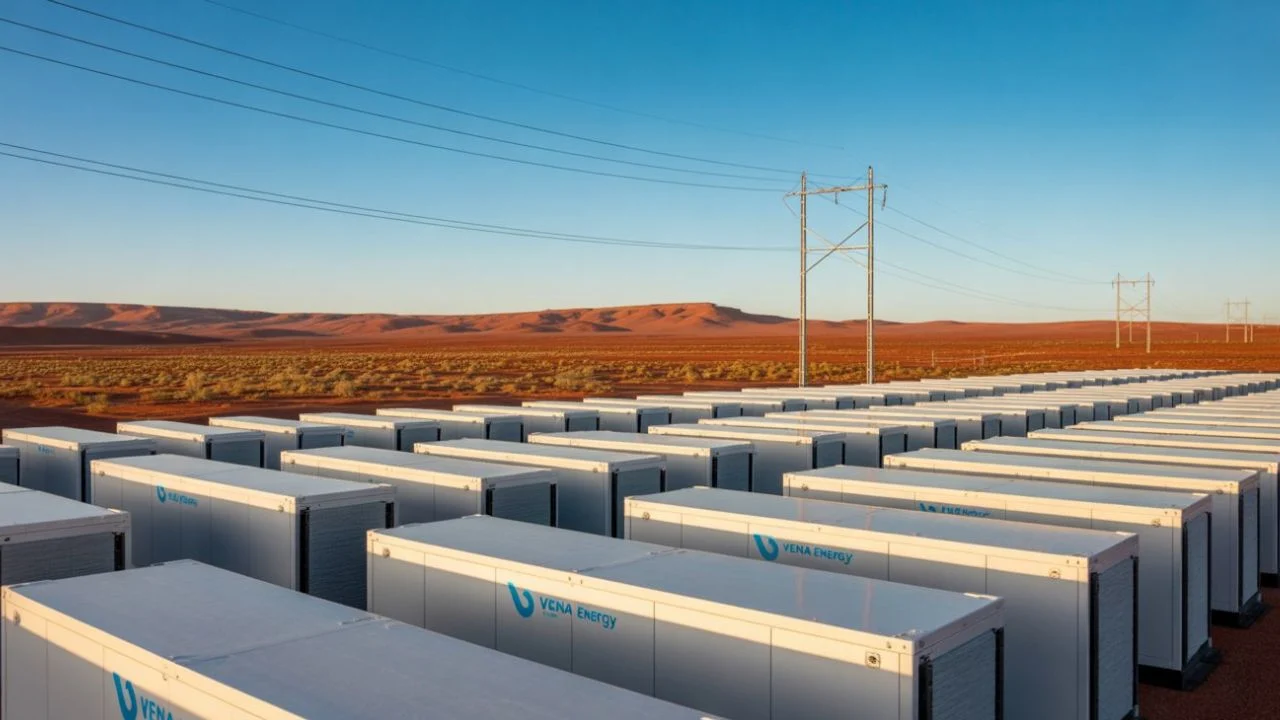
Tailem Bend 3 Battery Project: South Australia’s renewable energy landscape is set for another major leap forward as Singapore-based developer Vena Energy begins construction on a large-scale battery energy storage system (BESS) at Tailem Bend. The new installation, boasting 204 MW / 408 MWh of storage capacity, will sit alongside the company’s existing solar and battery infrastructure. Reinforcing the state’s reputation as a global leader in clean-energy innovation.
A New Chapter in the Tailem Bend Renewable Energy Precinct
Located around 90 kilometres southeast of Adelaide, the Tailem Bend precinct has steadily evolved into one of South Australia’s most significant renewable hubs. The latest installation—known as Tailem Bend 3—marks the third stage of a long-term. Multi-phase development strategy that integrates solar power generation with utility-scale battery storage.
Construction has officially commenced, and the project is scheduled to be completed and operational by 2027. Once brought online, Tailem Bend 3 will rank among the largest battery energy storage systems in the state. Further supporting South Australia’s transformation into a high-renewable, low-emissions electricity system.
The new development follows two earlier phases:
Phase 1: Tailem Bend Solar Project (2019)
In 2019, Vena Energy delivered the 95 MW Tailem Bend Solar Project. Which became a key contributor to South Australia’s rapidly growing solar capacity. It demonstrated early on the company’s ambition to create a multi-layered renewable precinct capable of scaling alongside technological and market needs.
Phase 2: Tailem Bend Hybrid Expansion (2023–2024)
The second phase, completed between 2023 and 2024, introduced:
- 87 MW of additional solar capacity
- A 41.5 MWh battery energy storage system, operational from early 2024
This hybrid expansion improved the precinct’s ability to smooth solar output and provide flexible support to the state’s grid.
Phase 3: Tailem Bend 3 – A Major Storage Breakthrough
The newly announced 204 MW / 408 MWh BESS is the most ambitious phase yet. It will more than triple the precinct’s total storage capacity and allow significantly larger volumes of renewable energy to be stored. And dispatched when needed—particularly during peak demand or low renewable generation periods.
Read Also: Solar Investment Bonds 2025: How to Earn Monthly Income from Sunlight
Strengthening South Australia’s Renewable Energy Ambitions
South Australia has long been recognised as a global testing ground for high-renewable grids. The state has frequently operated with over 100% renewable energy during certain periods, driven largely by wind and solar. However, this achievement also brings challenges: renewable generation fluctuates, and without adequate storage, excess energy may be curtailed or wasted.
The Tailem Bend 3 battery helps solve this challenge by providing:
- Firming services to stabilise voltage and frequency
- Peak-shaving capability, reducing reliance on gas peaker plants
- Energy shifting, storing solar energy generated during the day for evening use
- Grid resilience, improving reliability as renewables supply increases
According to the South Australian government, large-scale batteries are essential for achieving its net-zero emissions target by 2050. And ensuring the state maintains its position as a renewable energy frontrunner.
Vena Energy: Expanding Its Footprint in Australia’s Clean-Energy Ecosystem
Vena Energy, which is owned by Global Infrastructure Partners (GIP)—a major U.S.-based investment fund—has steadily expanded its presence in Australia through utility-scale solar and battery projects. The firm stated that Tailem Bend 3 will play a pivotal role in its national growth strategy.
Owen Sela, Head of Australia at Vena Energy, highlighted the significance of the project, noting that the new system will support the stability of South Australia’s increasingly renewable-powered grid.
Sela said:
“This 408 MWh system adds substantial storage capacity that will support South Australia’s world-leading renewable energy adoption. While aligning with our commitment to developing utility-scale renewable energy and storage assets that contribute to Australia’s clean energy transition.”
He emphasised that the BESS will enable better utilisation of the expansive solar resources already installed at Tailem Bend. Ensuring excess generation is not lost but stored and released at times of high demand.
A Strategic Move Toward Long-Term Energy Reliability
South Australia’s rapid uptake of variable renewables—particularly solar—means energy storage has become an essential component of the state’s grid. Batteries like Tailem Bend 3 offer multiple benefits, including:
1. Grid Stability
Large-scale batteries help stabilise the grid by providing rapid-response services that keep frequency within normal ranges.
2. Better Use of Solar Power
Solar generation peaks midday. Without storage, much of this energy cannot be used. Tailem Bend 3 will allow solar energy generate during sunny periods to be deliver into the grid when households and businesses need it most.
3. Reduced Reliance on Fossil Fuels
As storage grows, the need for gas-fired peaker plants decreases, helping South Australia reduce emissions and accelerate toward a fully renewable future.
4. Economic Efficiency
Stored electricity can be sold during peak wholesale price periods, improving financial returns for operators and helping lower long-term energy costs for consumers.
Vena’s Broader Development Pipeline in Australia
Vena Energy has highlighted that the Tailem Bend 3 development is part of a much larger national strategy. The company currently manages:
- 732 MW of renewable energy generation
- 600 MWh of battery storage capacity
- A broader 6 GW development pipeline across Australia
This pipeline includes projects in various stages—operational, under construction, or contracted.
One of the company’s most prominent ongoing initiatives is the Wandoan South solar and battery project in Queensland, a multi-stage development designed to support Queensland’s renewable energy and energy storage targets.
Owen Sela described the Tailem Bend 3 project as a milestone in the company’s evolution:
“The Tailem Bend 3 BESS represents a significant milestone in Vena Energy’s growth strategy and a major expansion of our energy storage capabilities.”
South Australia’s Energy Storage Landscape Continues to Grow
South Australia remains one of the world’s leading markets for large-scale battery energy storage systems. Since the installation of the groundbreaking Hornsdale Power Reserve—often referred to as the Tesla Big Battery—in 2017, the state has seen a rapid rise in battery projects.
Key storage projects in the state include:
- Hornsdale Power Reserve (150 MW / 193.5 MWh)
- Lake Bonney BESS (25 MW / 52 MWh)
- Dalrymple ESCRI (30 MW / 8 MWh)
- Tailem Bend 2 BESS (41.5 MWh)
The addition of Tailem Bend 3’s 408 MWh system significantly expands this capacity, helping the state continue to manage its high penetration of renewables and strengthening its reputation as a global energy transition leader.
Read Also: India Solar Manufacturing Gap: Why It Matters for India’s Clean Energy Future
A Step Forward in Australia’s Clean-Energy Future
The commencement of the Tailem Bend 3 battery project underscores Australia’s accelerating commitment to renewable energy and grid-scale storage. With federal and state governments pushing for increased investment in low-carbon technologies, projects like Tailem Bend 3 showcase how private developers. And policymakers can work together to build resilient, modern energy systems.
As Australia progresses toward its national targets—including 82% renewables by 2030—integrated solar-and-storage precincts become increasingly vital. Vena Energy’s vision for Tailem Bend exemplifies how renewable hubs can evolve over time. Expanding in stages to meet rising energy demands, technological improvements, and market needs.
Conclusion
Vena Energy’s decision to begin construction on the 204 MW / 408 MWh Tailem Bend 3 battery marks a significant moment in South Australia’s renewable energy journey. By integrating substantial storage capacity with large-scale solar generation, the project strengthens the state’s grid, enhances energy reliability. And contributes to long-term decarbonisation goals.
As part of a much larger renewable precinct now entering its third phase, Tailem Bend continues to grow into a flagship example of how solar and battery systems can work together at scale. With completion expected in 2027, the project will play a key role in Australia’s transition to a cleaner, more secure. And more flexible electricity network.
Related Posts


2 thoughts on “Tailem Bend 3 Battery Project: Vena Energy Launches Major 408 MWh Storage Upgrade in South Australia”