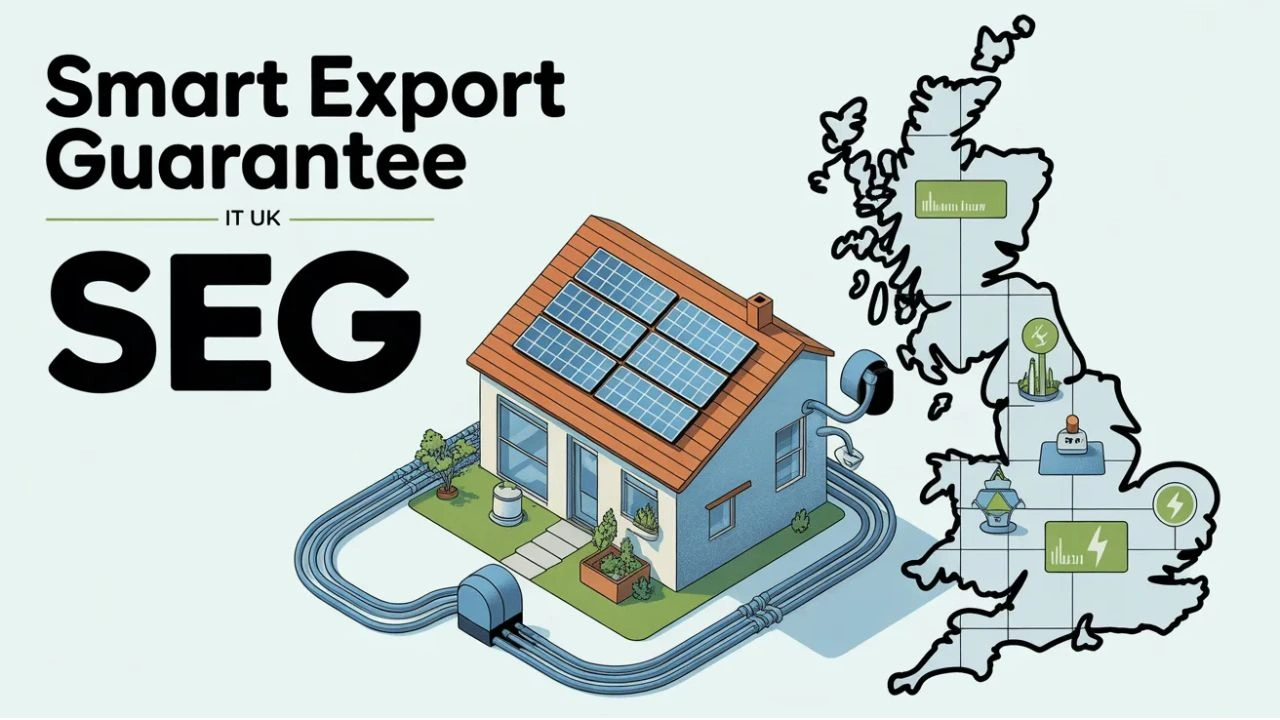
The Smart Export Guarantee UK is one of the most important renewable energy incentives available in the United Kingdom today. Introduced to encourage households and small businesses to generate their own renewable electricity, the scheme allows participants to earn money by exporting surplus energy back to the national grid. With energy costs rising and sustainability becoming a priority, SEG offers both financial benefits and environmental advantages.
This comprehensive guide explains what the Smart Export Guarantee is, how it works, eligibility requirements, payment structures, benefits, challenges, and how to maximize earnings. Whether you’re planning to install solar panels or already generate renewable energy, understanding SEG is crucial for making informed decisions.
What Is the Smart Export Guarantee (SEG)?
The Smart Export Guarantee is a government-mandated scheme that requires licensed electricity suppliers in the UK to pay small-scale renewable energy generators for exporting excess electricity to the grid. It replaced the older Feed-in Tariff (FiT) scheme in January 2020.
Under SEG:
- Electricity suppliers offer export tariffs
- Households generate renewable energy
- Surplus energy is exported to the grid
- Participants receive payments for exported electricity
The scheme ensures that clean energy producers are financially rewarded, encouraging more people to invest in renewable technologies such as solar panels.
Why the UK Introduced the SEG Scheme
The UK government introduced SEG to:
- Promote renewable energy adoption
- Reduce carbon emissions
- Support decentralized electricity generation
- Encourage innovation in energy markets
- Provide fair compensation for exported electricity
Unlike previous incentives, SEG is designed to create a competitive market where suppliers offer different export rates. This competition can lead to better pricing options for consumers.
Read Also: How to Apply PM Surya Ghar Yojana (Step-by-Step Guide 2026)
How the Smart Export Guarantee Works
The SEG process is simple and transparent. Here’s how it works step by step:
- Install a renewable energy system (solar panels, wind, etc.)
- Generate electricity for your home
- Use the energy you need
- Export surplus electricity to the grid
- Smart meter records exported electricity
- Supplier pays you based on exported units
Payments are calculated in pence per kilowatt-hour (kWh). The more electricity you export, the more you earn.
Some suppliers offer:
- Fixed-rate tariffs
- Variable tariffs
- Time-of-use tariffs
- Agile or dynamic pricing
This flexibility allows users to choose tariffs that maximize their earnings.
Technologies Eligible for SEG
To participate in the Smart Export Guarantee, your renewable energy system must use one of the following technologies:
- Solar photovoltaic (solar PV) panels
- Wind turbines
- Hydropower systems
- Micro combined heat and power (micro-CHP)
- Anaerobic digestion systems
Solar PV is the most common technology used by households in the UK.
Eligibility Requirements for SEG
To qualify for the Smart Export Guarantee, you must meet certain conditions:
- System capacity up to 5MW (50kW for micro-CHP)
- Installation certified under approved standards
- Smart meter capable of measuring export
- Renewable energy generation technology
- Export electricity to the grid
Most residential solar installations easily meet these requirements, making SEG accessible to homeowners.
SEG vs Feed-in Tariff: Key Differences
The Smart Export Guarantee replaced the Feed-in Tariff (FiT), but the two schemes operate differently.
Feed-in Tariff:
- Paid for electricity generation and export
- Fixed government-set rates
- Closed to new applicants
- Guaranteed payments
Smart Export Guarantee:
- Pays only for exported electricity
- Supplier-set rates
- Open to new applicants
- Competitive pricing
SEG offers more flexibility, though payments depend on market rates.
How Much Can You Earn With SEG?
SEG earnings vary depending on several factors:
- Size of renewable system
- Energy consumption patterns
- Export tariff rate
- Weather conditions
- Battery storage usage
Typical earnings scenarios:
Small Solar System (2–3kW)
- Lower export volumes
- Modest annual payments
- Useful for bill reduction
Medium System (4–5kW)
- Balanced self-use and export
- Noticeable yearly earnings
- Faster return on investment
Large System (6kW+)
- High export potential
- Significant SEG income
- Maximum savings
Although SEG alone may not generate a full income, it significantly improves the financial viability of renewable installations.
Importance of Smart Meters in SEG
A smart meter is mandatory for SEG participation. It measures how much electricity you export.
Benefits of smart meters:
- Accurate export tracking
- Real-time energy monitoring
- Access to flexible tariffs
- Better energy management
Without a smart meter, suppliers cannot calculate export payments, making SEG participation impossible.
SEG Tariff Types Explained
Different suppliers offer various tariff structures:
Fixed Tariff
- Same payment rate for all exports
- Predictable earnings
- Easy to understand
Variable Tariff
- Rates change with market prices
- Potential for higher earnings
- Less predictable
Time-of-Use Tariff
- Higher payments during peak demand
- Requires strategic exporting
Agile Tariff
- Dynamic pricing
- Maximum earnings potential
- Best with battery storage
Choosing the right tariff can significantly increase income.
Battery Storage and SEG
Battery storage enhances SEG benefits. Instead of exporting immediately, you can store energy and export later when rates are higher.
Benefits include:
- Increased export income
- Greater energy independence
- Backup power supply
- Reduced grid reliance
Homes with battery systems can optimize energy usage and maximize SEG payments.
Benefits of the Smart Export Guarantee
Financial Benefits
- Earn money from excess energy
- Faster return on solar investment
- Lower electricity bills
Environmental Benefits
- Reduced carbon footprint
- Cleaner energy production
- Supports UK climate goals
Energy Independence
- Less reliance on energy suppliers
- Protection from price increases
- Control over energy usage
These advantages make SEG an attractive incentive for renewable adoption.
Challenges of SEG
Despite its benefits, SEG has some limitations:
- Payments vary between suppliers
- Export-only payments (no generation payment)
- Initial installation costs
- Tariff complexity
However, the long-term benefits typically outweigh these challenges, especially as renewable technology becomes more affordable.
Real-Life Example of SEG in Action
Imagine a UK household with solar panels generating electricity during the day. The home uses some of the power, but the rest is exported.
Results:
- Lower electricity bills
- SEG payments for surplus
- Faster payback period
- Reduced emissions
This demonstrates how SEG turns renewable energy into a financial asset.
How to Apply for SEG
Steps to join:
- Install eligible renewable system
- Get a smart meter installed
- Compare SEG suppliers
- Apply for export tariff
- Sign agreement
- Start exporting electricity
Once approved, payments begin based on exported energy.
Choosing the Best SEG Supplier
When selecting a supplier, consider:
- Export rate per kWh
- Contract length
- Payment frequency
- Smart meter compatibility
- Variable vs fixed pricing
Comparing suppliers ensures maximum financial return.
Tips to Maximize SEG Earnings
To increase income:
- Install high-efficiency solar panels
- Use battery storage
- Shift energy usage to daytime
- Export during peak pricing
- Monitor generation patterns
These strategies help maximize exportable electricity.
Future of SEG in the UK
The Smart Export Guarantee is expected to grow as:
- Solar adoption increases
- Battery costs decrease
- Smart grids expand
- Dynamic tariffs improve
Experts predict more competitive export rates and innovative payment models.
Read Also: solar tax credit 2026 USA: How Much You Can Save?
Is the Smart Export Guarantee Worth It?
For most UK households, the answer is yes. SEG:
- Improves solar investment returns
- Provides ongoing income
- Supports clean energy
- Enhances energy independence
It transforms renewable energy systems from cost-saving tools into income-generating assets.
Conclusion
The Smart Export Guarantee is a key component of the UK’s renewable energy transition. By allowing households and businesses to earn money from exported electricity, the scheme promotes sustainability while providing financial benefits.
With rising energy prices and growing environmental awareness, SEG offers a smart, long-term solution for homeowners looking to invest in renewable energy. By choosing the right tariff, using battery storage, and optimizing energy usage, participants can maximize earnings and contribute to a cleaner future.
The Smart Export Guarantee isn’t just an incentive — it’s a step toward a decentralized, sustainable energy system where consumers become producers and clean energy becomes profitable.
Related Posts



2 thoughts on “Smart Export Guarantee UK (SEG) Explained – Earn Money From Solar Export”