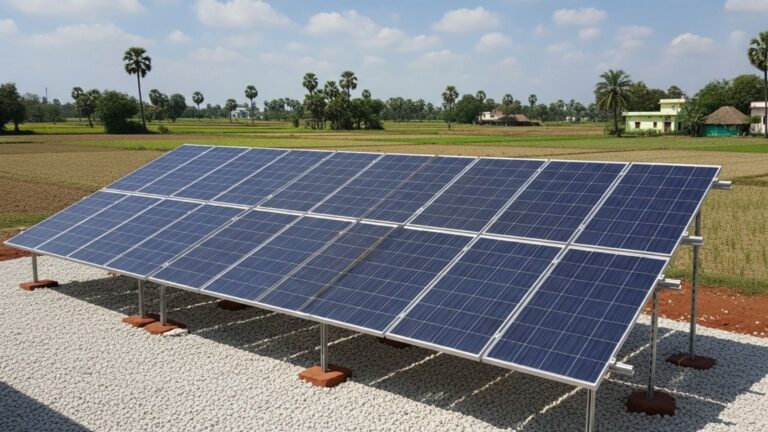

The world is rapidly shifting toward clean and renewable energy, with solar power at the very center of this transformation. While governments and corporations are key players, one group is performing a pivotal role behind the scenes: universities. They are not just places of education but dynamic innovation hubs where research, technology, and a new generation of talent are converging to drive the global energy transition.
From developing record-breaking solar cells to creating microgrids that power entire campuses, universities are helping shape how the world produces, stores, and uses electricity. Their work is turning the promise of a sustainable future into a tangible reality.
The Trifecta: Why Universities Are Unique Energy Leaders
Universities possess a powerful combination of assets that make them ideal drivers of the solar revolution:
- Innovation and R&D Powerhouses: They are home to top researchers and state-of-the-art laboratories. This environment is crucial for tackling the fundamental scientific challenges of solar energy.
- Living Laboratories: Campuses are essentially small cities. This allows universities to test new technologies like solar carports, microgrids, and smart building systems at scale, de-risking them for broader adoption.
- Workforce and Education: They are responsible for training the next generation of solar engineers, technicians, policy experts, and entrepreneurs. Specialized programs and certifications are the backbone of a growing green workforce.
Breakthroughs in Solar Research You Should Know
University labs are the source of many of the most promising advances in solar technology. Here are a few key areas:
Pushing Efficiency Boundaries
- Perovskite Solar Cells: Researchers are developing perovskite-based solar cells, which can be more efficient than traditional silicon and are cheaper to produce. In 2026, several university labs have reported laboratory efficiencies exceeding 29% for these cells, closing in on the theoretical limits of silicon.
- New Materials: Beyond perovskite, scientists are exploring organic photovoltaics and quantum dots to create ultra-lightweight, flexible, and even transparent solar panels that could be integrated into windows or clothing.
Read Also: Arizona’s Solar-First Land Policy Sparks Tension Between Clean Energy and Housing
Solving the Storage Puzzle
As you know, solar is intermittent. This is where battery research, much of it in universities, is critical.
- Innovations Beyond Lithium-Ion: Research is accelerating into solid-state batteries, sodium-ion batteries, and flow batteries. These promise higher energy density, longer lifespans, and greater safety. For example, researchers at institutions like MIT and Stanford are leading work on solid-state electrolytes that could revolutionize grid-scale storage.
Smart Grids and AI
Universities are also pioneering the software side of the energy transition.
- AI-Driven Energy Management: Researchers are developing artificial intelligence algorithms that can predict energy generation and consumption patterns. This allows a “smart campus” to automatically shift loads, like pre-cooling a building, to times when solar energy is abundant or storage is cheap, maximizing efficiency.
From Research to Reality: Living Laboratories on Campus
The most compelling evidence of university leadership is the projects they are building. They are not just talking about innovation; they are demonstrating it.
Real-World Examples and Their Impact
| Institution | Project | Key Achievement & Benefit |
|---|---|---|
| University of Hawaii – West Oʻahu | Solar Carports + Battery Storage | Will offset 100% of the campus cooling load and produce 2.38 million kWh annually, showcasing a scalable model for energy resilience on islands. |
| University of California, Davis | UC Davis West Village | Often cited as a “net-zero” community, it features extensive solar and storage, demonstrating how residential and campus energy can be integrated. |
| Stanford University | Comprehensive Energy System | Its project uses a massive solar plant, heat recovery, and advanced storage to significantly reduce greenhouse gas emissions and operational costs. |
What These Projects Mean for You: These are not just feel-good stories. They are proving grounds for technologies like battery storage, EV integration, and microgrid controls that will soon be available for businesses and homeowners. They provide critical data on cost savings, which is often substantial. For instance, by reducing peak demand charges, these systems save institutions millions in operational costs over their lifetimes.
Global Collaboration and Workforce Development
The energy transition is a global effort, and universities are leading the charge in international collaboration and education.
- International Partnerships: Programs like the Global Sustainable Electricity Partnership (GSEP) and various European Union research frameworks bring together students and academics from dozens of countries to collaborate on projects aimed at improving energy access in developing regions.
- Academic Programs for a Green Workforce: The demand for skilled professionals is soaring. Universities are responding with dedicated programs like:
- B.S. in Solar Energy Engineering
- M.S. in Renewable Energy and Sustainability
- MBA in Clean Energy Management
- Energy Policy and Law Certificates
- These programs ensure a pipeline of talent ready to design, install, finance, and manage the solar projects of tomorrow.
Your Action Plan: How to Learn From and Partner With Universities
Whether you are a student, a homeowner, or a business leader, you can benefit from this ecosystem.
- For Students and Future Professionals: Explore the university programs offered by institutions like Stanford (Precourt Institute for Energy), MIT (MIT Energy Initiative), or the University of California system. Seek out internships or work-study positions on campus sustainability projects.
- For Homeowners and Businesses: Look for partnerships between local universities and installers. Universities often conduct solar resource assessments or can connect you with reputable, technology-forward installation firms.
- For Community Leaders and Policymakers: Use the research and data from university pilot projects to inform local policy. For example, data on cost savings and grid benefits from a campus microgrid can be powerful evidence for supporting similar community projects.
The Future of Solar, Co-Written by Universities
The continued involvement of universities is not just important—it is essential. As technology evolves, they will remain the forge where the next generation of energy solutions is created.
The future will see:
- Building-Integrated Photovoltaics (BIPV): Solar panels becoming a standard construction material for windows and roofing.
- Solar Fuel: University research into converting solar energy into hydrogen or other storable chemical fuels.
- Equitable Access: Universities will play a key role in developing affordable, decentralized solar solutions for underserved communities worldwide.
Read Also: New Global Solar Record: China’s Perovskite–Silicon Tandem Cell Hits 33.35%
The Bottom Line
Universities are the unsung architects of our solar future. Through relentless research, by deploying cutting-edge projects on their own campuses, and by training the global clean energy workforce, they are accelerating the transition to a more sustainable and resilient world. Their leadership provides a clear, data-driven blueprint for how societies can power themselves for generations to come.
Author: Solar Facts India Team
This analysis is based on publicly available research, project announcements, and academic data as of August 2026. It is for informational purposes only and does not constitute professional financial or investment advice. For our full disclaimer and contact information, please visit our About and Disclaimer pages.
Related Posts