
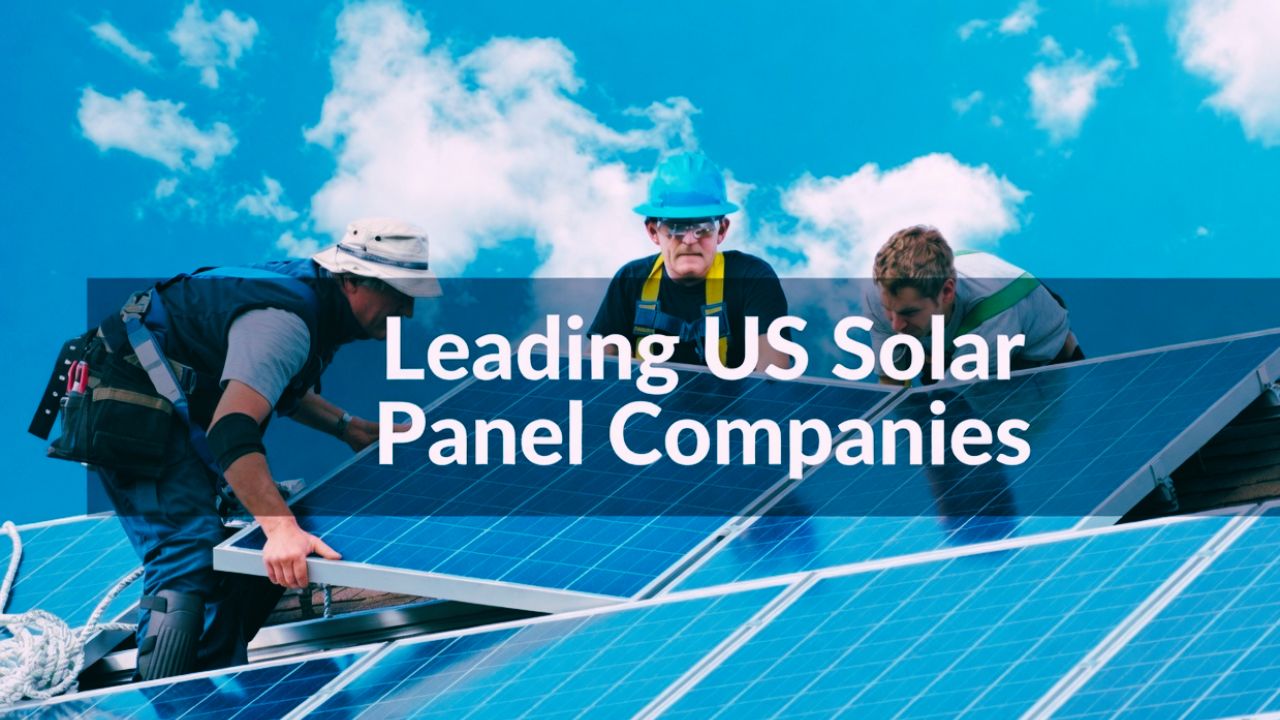
The U.S. solar manufacturing industry is undergoing a historic transformation. Fueled by the Inflation Reduction Act (IRA) and a national push for energy independence, domestic production capacity is expanding at an unprecedented rate. In 2024 alone, the U.S. added over 10 GW of new solar module manufacturing capacity, and this growth shows no signs of slowing.
For homeowners, businesses, and project developers, this shift means more choices than ever. But with new factories and brands emerging rapidly, navigating the landscape can be confusing. This guide provides a data-driven overview of the top American solar panel manufacturers in 2026, helping you make an informed decision for your next project.
Read Also: Why India’s Solar Industry Is Facing Factory Shutdowns in 2026
Understanding “Made in the USA”
Before we dive into the manufacturers, it’s important to understand what “U.S. manufacturing” means. There are different tiers:
- Cell Manufacturing: The most critical and complex step, where silicon wafers are turned into solar cells. This has historically been concentrated in China. U.S. cell manufacturing capacity has grown significantly due to the IRA but still lags behind module assembly.
- Module Assembly: The process of taking cells and assembling them into finished panels. This is the most common type of manufacturing in the U.S., with many facilities focused on this final step.
What This Means for You: A panel “made in the USA” may have its cells imported but assembled domestically. For many projects, this is still a good choice, offering supply chain benefits and supporting American jobs, even if the cells are not domestically sourced. For projects with strict “domestic content” requirements for incentives, you must verify the specific components.
Top U.S. Solar Panel Manufacturers in 2026
Below are the leading manufacturers, analyzed for their technology, market focus, and key strengths.
1. First Solar — America’s Giant of Thin-Film
- Headquarters: Tempe, Arizona
- Technology: Cadmium Telluride (CdTe) Thin-Film
- Primary Market: Utility-Scale Solar, Large Commercial Projects
- 2026 Production Capacity: Over 6 GW in the U.S.
In-Depth Analysis:
First Solar is the undisputed leader in U.S. solar manufacturing. Unlike almost every other major manufacturer, it uses thin-film technology instead of traditional crystalline silicon. This gives it several unique advantages:
- Performance in Heat: Thin-film panels perform better than silicon panels in high-temperature and humid environments, making them ideal for large solar farms in the U.S. Sunbelt.
- Lower Carbon Footprint: The manufacturing process for thin-film panels is less energy-intensive than for silicon, giving them a significantly lower carbon footprint.
- Lead Time and Scalability: First Solar is highly bankable and has a reputation for reliable delivery, which is critical for multi-megawatt projects.
2. Qcells — The Residential Market Leader
- Headquarters: Dalton, Georgia (U.S. HQ)
- Technology: High-Efficiency Monocrystalline (n-type TOPCon)
- Primary Market: Residential, Commercial, and Community Solar
- 2026 Production Capacity: Over 5 GW in the U.S.
In-Depth Analysis:
Qcells has invested over $2.5 billion in its U.S. manufacturing facilities, making it a powerhouse in the domestic market. Its Dalton, Georgia plant is one of the largest solar manufacturing facilities in the Western Hemisphere. As of 2026, Qcells is a top-tier choice for residential and commercial projects.
- Technology: Its focus on n-type TOPCon technology offers higher efficiency and lower degradation rates compared to standard p-type panels. This translates to more energy over the panel’s 25-year lifespan.
- Warranty: Qcells offers some of the strongest warranties in the industry, often including a 25-year product and performance warranty, providing exceptional peace of mind for homeowners.
3. Silfab Solar — Premium, High-Efficiency Modules
- Headquarters: Washington State
- Technology: High-Efficiency Monocrystalline (including bifacial)
- Primary Market: Premium Residential and Commercial
- 2026 Production Capacity: Over 1 GW in the U.S.
In-Depth Analysis:
Silfab Solar has a strong reputation for manufacturing quality and advanced automation. It positions itself as a premium brand, focusing on efficiency and aesthetics.
- Panel Efficiency: Silfab’s highest-tier residential panels often achieve efficiencies of 22.5-23%, among the best in the market.
- Build Quality: The company uses advanced robotics and quality control, which results in highly consistent and durable products.
- Aesthetics: Silfab offers panels with a sleek, all-black design that appeals to homeowners who prioritize curb appeal.
4. Mission Solar Energy — The Texas-Made Workhorse
- Headquarters: San Antonio, Texas
- Technology: Monocrystalline
- Primary Market: Residential, Commercial, and Agricultural
- 2026 Production Capacity: Over 500 MW in the U.S.
In-Depth Analysis:
Mission Solar Energy is one of the few manufacturers with a strong focus on vertical integration within the U.S., doing much of its cell manufacturing and module assembly in Texas. This gives it a more secure supply chain and a robust domestic content profile.
- Durability: Its panels are known for being exceptionally durable and perform well in extreme weather, including the high heat and hail risks in the southern U.S.
- Warranty: It offers a strong, standard 25-year performance warranty, backed by a well-established company.
5. Heliene — The Fast-Growing Innovator
- Headquarters: Minnesota
- Technology: Monocrystalline and Bifacial
- Primary Market: Commercial, Community Solar, and Utility
- 2026 Production Capacity: Over 1 GW in North America (expanding rapidly)
In-Depth Analysis:
Heliene has been one of the fastest-growing manufacturers in North America, known for its agility and willingness to adopt new technologies. It is a strong choice for developers looking for a reliable, expansion-minded partner.
- Technology Adoption: Heliene quickly adopts new cell formats and panel designs, offering a modern product line.
- Supply Chain: It has established strong partnerships for raw materials, helping to insulate its supply chain from global disruptions.
Read Also: 3kW Solar Panel Price in India (2026): A Complete Homeowner’s Guide
Comparison Table of Top U.S. Solar Manufacturers
| Company | Headquarters | Technology Type | Primary Market | 2026 U.S. Capacity (Approx.) | Key Strength |
|---|---|---|---|---|---|
| First Solar | Arizona | Thin-Film (CdTe) | Utility-Scale | >6 GW | Heat performance, lowest carbon footprint |
| Qcells | Georgia | n-type TOPCon Mono | Residential & Commercial | >5 GW | Market leader, best-in-class warranty |
| Silfab Solar | Washington | High-Efficiency Mono | Premium Residential & Commercial | >1 GW | Highest efficiency, premium build quality |
| Mission Solar | Texas | Monocrystalline | Residential, Commercial, Ag | >500 MW | U.S.-made cells, extreme weather durability |
| Heliene | Minnesota | Mono & Bifacial | Commercial & Utility | >1 GW (North America) | Rapid growth, modern technology |
Critical Factors for Choosing a U.S. Manufacturer
- Incentive Qualification: If you are relying on federal tax credits or state-level bonuses for “domestic content,” you must verify the percentage of U.S.-made components. This is where manufacturers like First Solar and Mission Solar have a significant advantage, while others may offer a “MADE IN USA” module that qualifies under less strict definitions.
- Warranty Structure: Don’t just look at the length. Look at the fine print. For example, some manufacturers offer a 25-year product warranty (highly valuable), while others offer a 10-year product warranty and a 25-year performance warranty. The product warranty is more valuable as it covers manufacturing defects.
- Bankability: For large-scale projects, a manufacturer’s bankability is crucial. This refers to a company’s financial stability and reputation, ensuring it will be around to honor its 25-year warranty. First Solar, Qcells, and Silfab are all highly bankable. Smaller or newer companies may not be approved by all financiers.
The Future of U.S. Solar Manufacturing
The industry is moving towards full domestic supply chains. Companies are investing heavily in U.S.-based polysilicon, wafer, and cell production. This will reduce reliance on imported components and make “Made in the USA” more meaningful than ever before.
Key trends to watch:
- Bifacial Panels: These panels, which generate power from both sides, are becoming the standard for utility and commercial ground-mount projects.
- Domestic Storage: Major manufacturers are integrating U.S.-made energy storage systems with their solar panels, providing a complete domestic solution.
- Innovation: The growth of U.S. manufacturing is also boosting domestic R&D, leading to more efficient and durable panels.
Your Action Plan
- Define Your Project: Is it a home, a business, or a large farm? This will determine which manufacturers are best suited for your needs.
- Check Incentives: Consult the Database of State Incentives for Renewables & Efficiency (DSIRE) to see what financial benefits apply to your project and location.
- Get Multiple Quotes: Work with an installer who offers options from different manufacturers (e.g., Qcells and Mission Solar or Silfab) to compare performance and price.
- Verify Warranties: Ask for the warranty documents and read them carefully.
- Think Long-Term: The cheapest panel is rarely the best investment over 25 years. Consider performance, degradation rate, and company longevity.
The Bottom Line
American solar manufacturing is a thriving and essential part of the U.S. energy transition. In 2026, you have more high-quality, domestic options than ever before. Companies like First Solar and Qcells lead the market with scale and innovation, while Mission Solar and Silfab offer excellent alternatives for specific needs.
The best choice depends entirely on your project’s scale, budget, and goals. By following this guide and doing your own research, you can confidently select a U.S.-made solar panel that will provide clean, reliable energy for decades.
Author: Solar Facts India Team
This analysis is based on publicly available data, company reports, and industry analysis as of August 2026. It is for informational purposes only and does not constitute professional financial or investment advice. Please verify all details with official sources before making any purchasing decisions. For our full disclaimer and contact information, please visit our About and Disclaimer pages.
Related Posts


1 thought on “Top U.S. Solar Panel Manufacturers in 2026: A Complete Guide”