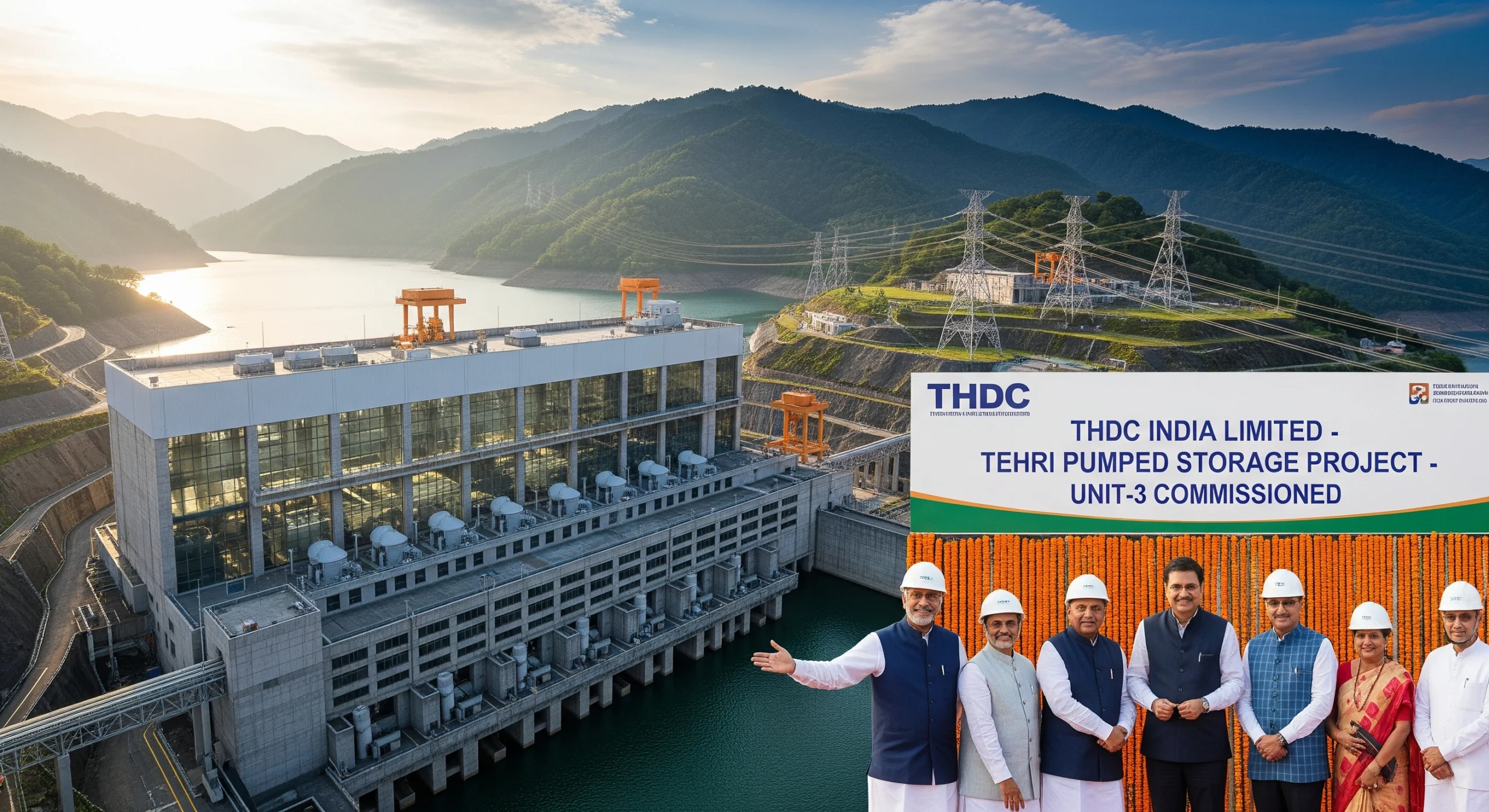
THDC Commissions Unit-3: india’s renewable energy landscape has entered a remarkable new phase with THDC India Limited successfully commissioning Unit-3 of the 1,000 MW (1 GW) Tehri Pumped Storage Project (PSP). This milestone marks a critical step toward strengthening the nation’s grid stability, ensuring round-the-clock renewable power availability, and enhancing energy security. As India pushes aggressively toward its 500 GW non-fossil fuel target by 2030, the operationalization of this crucial unit brings the country closer to achieving a more flexible, resilient, and reliable energy infrastructure.
The Tehri PSP is one of the most ambitious hydropower storage initiatives in India, strategically located in Uttarakhand’s Tehri district. With Unit-3 now commissioned, the project demonstrates India’s technical capability to build advanced energy storage systems that complement the rapid expansion of solar and wind power. Beyond capacity addition, this unit represents an engineering accomplishment that supports the broader transition toward clean, dispatchable, and grid-balancing renewable energy.
What Makes the Tehri Pumped Storage Project So Important?
As the share of solar and wind power rises nationwide, India faces a familiar challenge: intermittency. Renewable sources generate electricity only when nature permits, creating fluctuations that can destabilize the grid during peak demand periods.
Pumped storage systems are the world’s most proven solution to this challenge. They work like massive natural batteries, storing excess energy generated during off-peak hours and releasing it when demand surges. With the commissioning of Unit-3, the Tehri PSP increases India’s overall energy storage capability and makes renewable energy more dependable.
Key Functions of Pumped Storage:
- Load balancing for overall grid stability
- Energy storage for surplus renewable power
- Frequency regulation during peak demand
- Emergency backup during grid disturbances
- Support for integrating large-scale solar & wind
This project is particularly vital because India is witnessing exponential growth in renewable installations, and storage solutions like PSPs are essential for optimizing their performance.
THDC’s Milestone: Unit-3 Commissioned Successfully
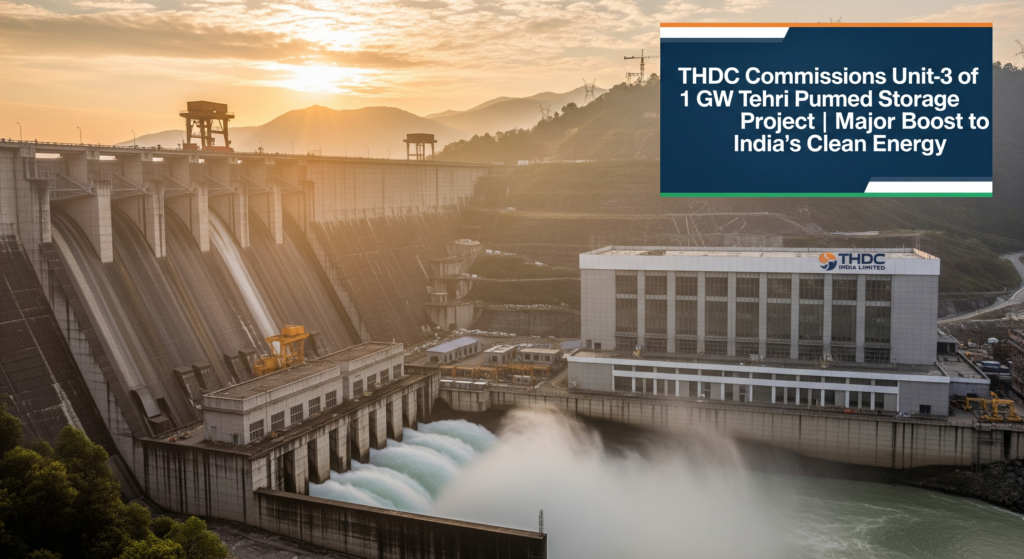
THDC (Tehri Hydro Development Corporation) India Limited has been at the forefront of hydropower development in the country. The commissioning of Unit-3, having a capacity of 250 MW, marks the third step in activating all four reversible pump-turbine units of the Tehri PSP. With every new unit synchronized to the grid, the project becomes more capable of helping India meet its green energy targets.
Highlights of the Commissioning:
- Unit-3 achieved full synchronization with the national grid.
- The unit demonstrated efficient performance during peak and off-peak operations.
- Testing and operational validation were conducted successfully.
- The commissioning follows the earlier completion of Units 1 and 2.
- It moves the Tehri PSP closer to its full operational capacity of 1,000 MW.
This milestone showcases THDC’s ability to execute large-scale, complex hydro engineering projects despite tough terrain and logistical constraints in the Himalayan region.
Understanding How the Tehri PSP Works
The Tehri Pumped Storage Project functions on a reversible turbine mechanism. During low power demand intervals, electricity is used to pump water from the lower reservoir back to the upper reservoir. When demand increases, this water is released to generate electricity.
The System Involves:
- Upper reservoir: Tehri Lake
- Lower reservoir: Koteshwar Dam
- Reversible pump-turbines: 4 units of 250 MW each
- Underground powerhouse: Engineered for stability and seismic resistance
- Advanced control systems for optimal power generation and water utilization
The cyclic operation of pumping and generating makes it one of the most efficient and large-scale energy storage mechanisms in India.
Read Also: The Sun Bank: How Future Generations Will Deposit Energy Instead of Money
Strategic Importance of the Tehri PSP for India
1. Strengthening Grid Reliability
As India’s renewable capacity expands, stable grid mechanisms are critical. Pumped storage provides immediate power when solar or wind suddenly drop, ensuring smooth supply to households and industries.
2. Lower Carbon Footprint
Unlike fossil fuel–based peaker plants, PSPs release zero emissions, making them ideal partners for renewable energy sources.
3. Reducing Dependency on Thermal Power
With Unit-3 now functional, the need for coal-powered backup reduces significantly, helping India transition toward a cleaner energy mix.
4. Supporting 24×7 Renewable Power
Solar power peaks during the daytime while demand peaks in the evening. Pumped storage bridges this mismatch efficiently.
5. Unlocking the Renewable Energy Market
Reliable storage will encourage more investors to build solar and wind mega-projects, knowing output variability can be managed effectively.
Engineering Excellence Behind the Unit-3 Commissioning
The Himalayan terrain presents challenges such as landslides, geological instability, and extreme weather. Commissioning Unit-3 required careful planning, execution, and testing. Engineers and specialists collaborated on:
- Excavation of underground powerhouse caverns
- Installation of high-precision turbine systems
- Construction of water diversion tunnels
- Automation and digital monitoring setup
- Environmental safeguards for Himalayan ecology
The successful commissioning attests to THDC’s commitment to innovation, safety, and sustainable development.
Economic and Social Impact on Uttarakhand
1. Employment Generation
The multi-year project created thousands of direct and indirect jobs for engineers, technicians, and local workers.
2. Boost to Local Infrastructure
Significant improvements were made to roads, transportation networks, and public facilities to support project operations.
3. Growth in Ancillary Industries
Local businesses, construction companies, equipment manufacturers, and service providers benefited from steady demand.
4. Promotion of Green Tourism
Tehri Lake has already emerged as an adventure tourism hotspot. Better infrastructure and increased visibility will attract more visitors.
5. Long-Term Economic Stability
With hydropower becoming a sustainable revenue generator, Uttarakhand gains a major financial asset with consistent long-term returns.
Environmental Sustainability and Safety Measures
Hydropower projects in the Himalayas often raise environmental concerns. THDC has implemented strict safeguards to minimize ecological impact.
Key Measures:
- Comprehensive environmental assessments
- Controlled water-release mechanisms
- Afforestation and soil-stabilization programs
- Continuous biodiversity monitoring
- Community consultations and rehabilitation plans
The pumped storage model itself is eco-friendly, as it reuses the same water repeatedly, avoiding waste and protecting river ecosystems.
How Tehri PSP Supports India’s 2030 Green Energy Targets
India has pledged at global climate platforms to:
- Achieve 500 GW of renewable energy capacity
- Reduce carbon intensity by 45%
- Increase non-fossil fuel share to 50% of total capacity
Storage is the backbone of these goals. Without it, renewable power cannot reliably meet demand. The Tehri PSP adds essential storage capacity and strengthens the national grid.
Contribution of Tehri PSP:
- Enables large-scale solar and wind integration
- Provides 1,000 MW of flexible, dispatchable power
- Helps flatten peak demand curves
- Reduces reliance on coal-based peaker plants
- Enhances India’s climate commitments
With one more unit left to be commissioned, the project will soon operate at full capacity, delivering powerful clean energy benefits.
What Comes Next? The Road Ahead for THDC
With Unit-3 now operational, THDC is moving toward commissioning Unit-4—the final unit of the Tehri PSP. Once completed, the full 1 GW capacity will transform India’s pumped storage landscape.
Future Plans Include:
- Renewables-linked hydro storage corridors
- More pumped-storage projects in Himalayan and southern states
- Expansion of solar-hydro hybrid models
- Digital and AI-driven hydropower management systems
- Exporting technological expertise to other nations
THDC is evolving into a critical pillar of India’s renewable energy mission.
Conclusion: A Landmark Achievement for India’s Clean Energy Journey
The commissioning of Unit-3 of the 1 GW Tehri Pumped Storage Project marks a decisive step in India’s quest for sustainable, reliable, and future-ready energy systems. As renewable generation expands rapidly, pumped storage facilities like this ensure that clean power remains available round-the-clock, even when the sun sets or the wind slows.
This milestone not only strengthens Uttarakhand’s infrastructure and economy but also moves India closer to achieving its climate goals. The Tehri PSP stands as a shining example of engineering brilliance, environmental responsibility, and strategic vision.
With Unit-4 on the horizon, India’s pumped-storage capability is set to grow even stronger—providing energy security for generations to come.
Disclaimer
This article is for informational purposes only. While we strive for accuracy, we do not guarantee completeness or reliability. Readers should verify information independently. We are not responsible for any decisions or outcomes based on this content. All trademarks and images belong to their respective owners.
Related Posts