India’s tourism industry is entering a new era in 2025—a fusion of eco-luxury and renewable innovation. Leading this transformation is the concept of floating solar resorts, luxurious retreats powered entirely by clean solar energy while floating on serene lakes and reservoirs. These futuristic destinations combine sustainability with indulgence, offering travelers guilt-free comfort amidst nature’s calm.
As India’s renewable energy capacity surpasses 214 GW and the nation aims for 500 GW of non-fossil energy by 2030, tourism is now embracing this shift. Floating solar resorts exemplify how renewable innovation can redefine the hospitality industry—melding energy efficiency, luxury travel, and environmental responsibility.
Introduction
The Indian traveler of 2025 is eco-aware, seeking experiences that enrich both self and society. Floating solar resorts capture this spirit beautifully. Built on water bodies like lakes, reservoirs, or backwaters, these resorts operate primarily through floating photovoltaic (FPV) systems, generating clean electricity without occupying land or harming ecosystems.
Globally, floating solar technology has been applauded for reducing water evaporation, improving panel efficiency, and supporting renewable tourism. Now, India is positioning itself at the epicenter of this green hospitality revolution, combining floating architecture, solar energy, and sustainable tourism.
What Are Floating Solar Resorts?
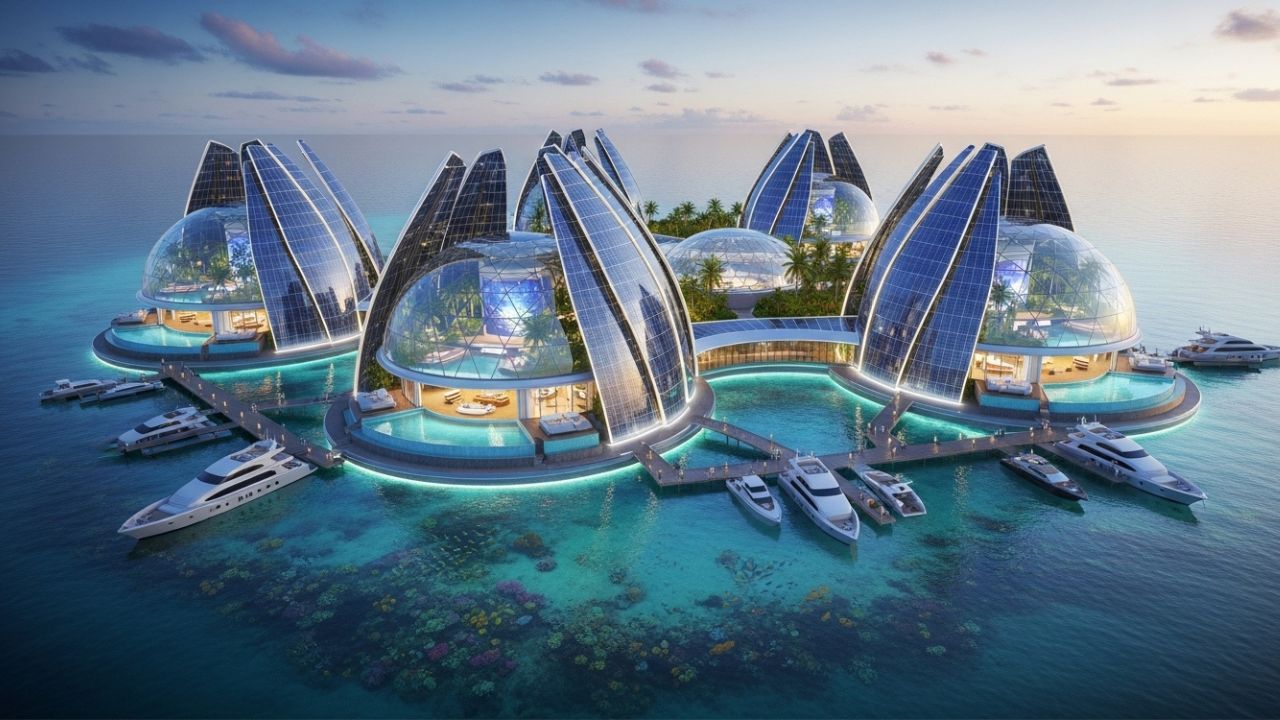
A floating solar resort is a premium hospitality establishment built on modular floating platforms that integrate renewable energy generation. The resort’s core power source is floating solar panels, usually installed nearby or as part of the structure itself.
These resorts go beyond typical eco-resorts—they are energy self-sufficient, carbon-neutral, and architecturally sustainable. Floating resorts use advanced anchoring systems to remain stable on water, smart cooling and heating powered by the sun, and wastewater recycling systems—all while offering the luxury of modern tourism.
Key components include:
- Floating solar PV platforms for clean power.
- Lightweight modular architecture for floating structures.
- Water-based cooling systems increasing solar efficiency.
- Waste management and desalination for sustainable living.
Read Also: Agrivoltaics in Tamil Nadu: Dual Land Use for Farming and Energy
India’s Renewable Tourism Revolution
India is home to some of the world’s largest floating solar parks, like the Omkareshwar Floating Solar Park (600 MW in Madhya Pradesh) and NTPC’s 100 MW Ramagundam installation in Telangana. These engineering marvels have paved the way for hybrid innovation — combining solar infrastructure with hospitality design.
States like Kerala, Goa, and Madhya Pradesh are leading the adoption of floating eco-resorts on dam backwaters and lakes. For instance, Kerala’s backwater tourism model already integrates renewable energy systems in its houseboats and floating villas. With solar energy integration, this model is transitioning from sustainable to “regenerative” tourism—where nature is not just preserved but enhanced.
How Floating Solar Resorts Work
The integration of renewable energy systems in these resorts relies on Floating Photovoltaic (FPV) technology, a system that converts sunlight into electricity via specialized floating solar panels.
Operational Process:
- Solar Generation: Photovoltaic modules mounted on buoyant structures convert sunlight into direct current (DC) electricity.
- Power Conversion: Inverters transform the DC power into alternating current (AC) for usage in resort operations—lighting, air conditioning, heating, and culinary systems.
- Energy Storage: Advanced lithium-ion and sodium-ion batteries store surplus energy for nighttime use.
- Smart Management: IoT-based systems regulate power consumption, ensuring zero waste and peak energy efficiency.
This self-sustainability allows these floating resorts to disconnect from traditional power grids, minimising infrastructure strain in ecologically sensitive areas.
Design Philosophy: Sustainability Meets Luxury
The design ethos of floating solar resorts centers on balance—where sustainability doesn’t compromise luxury.
Architects integrate biophilic design—structures inspired by nature that merge indoor and outdoor spaces. Local bamboo, recycled plastic, and lightweight composites make up most construction materials. These materials not only keep the carbon footprint low but also suit India’s humid, water-adjacent environments.
Guests enjoy the same 5-star comforts: spa lounges powered by solar thermal systems, air-conditioned suites cooled by solar electricity, and infinity pools built over pristine waters. The renewable infrastructure operates silently and aesthetically, creating an immersive eco-luxury experience that resonates with conscious travellers.
Environmental Benefits of Floating Solar Resorts
Beyond tourism, floating solar resorts are champions of ecological preservation and climate resilience.
- Carbon-Neutral Operations:
By relying entirely on renewable power, these resorts achieve up to 85–100% carbon neutrality, slashing diesel generator usage and emissions. - Water Conservation:
Floating solar installations reduce surface evaporation by up to 30–50%, preserving lake and dam water for local agriculture and communities. - Biodiversity Protection:
Architectural guidelines ensure minimal disturbance to aquatic ecosystems. Floating modules often act as artificial habitats for fish and microfauna. - Land Preservation:
Building over water eliminates the need for land clearing, preventing deforestation or soil disruption common in land-based resort projects. - Improved Solar Efficiency:
Solar panels perform better in cooler environments; the surrounding water maintains optimal temperature, increasing electricity generation by 5–10%.
The result? Resorts that conserve as much as they consume — true beacons of circular sustainability.
Popular Floating Solar Resort Concepts in India
1. The Omkareshwar Solar Retreat (Madhya Pradesh):
Located near the Omkareshwar Floating Solar Park, this concept resort integrates floating luxury suites with panoramic views of the Narmada River. Designed as an energy-positive resort, it feeds surplus electricity back into the state grid.
2. Alappuzha Floating Villas (Kerala):
Embracing Kerala’s houseboat heritage, these villas operate on solar energy, combining traditional wooden architecture with futuristic sustainability.
3. Sardar Sarovar Eco-Resort (Gujarat):
Planned along the reservoir periphery, using hybrid solar-wind systems to power both tourist zones and local communities.
4. Grape County Eco Resort (Maharashtra):
India’s first resort to operate 100% on solar energy, saving over ₹2.9 million annually and inspiring the transition of land resorts to floating setups.
5. Chilika Lake Sustainable Resort (Odisha):
Under proposal as a joint initiative by the Ministry of Tourism and NTPC, it will introduce floating solar cottages with integrated desalination and aquaculture.
Socioeconomic Impact
Empowering Local Communities:
Floating solar resorts are often located in or near rural and coastal districts. These resorts generate local employment through maintenance, eco-tourism, and hospitality training programs.
Boosting State Revenues:
Eco-tourism hubs supported by solar technology attract global travelers. Increasing state tourism GDP contributions while minimizing environmental impact.
Supporting Renewable Targets:
By merging tourism growth with renewable energy goals, India strengthens its position as a global leader in sustainable hospitality.
Challenges and Considerations
Despite their innovation, floating solar resorts face multiple implementation challenges:
- High Initial Investment:
The integration of floating solar infrastructure adds to project cost; however, energy savings quickly offset initial expenses within 5–7 years. - Environmental Sensitivity:
Poorly regulated projects could harm aquatic habitats if not carefully engineered. Regular environmental impact assessments are essential. - Maintenance of Floating Structures:
Algae buildup, corrosion, and biofouling require regular maintenance to ensure safe, clean operation. - Regulatory Barriers:
Policies around ownership and energy sharing from water-based projects are still evolving under India’s Ministry of New and Renewable Energy (MNRE).
Nevertheless, private-public collaborations and R&D incentives are helping address these challenges rapidly.
India’s Future: Floating Solar Tourism by 2030
Globally, the floating solar market is expected to reach USD 512 million by 2032, growing at a 12.4% CAGR. In India, floating solar resorts are projected to become a mainstream segment of sustainable tourism by 2028–2030, especially in states rich in inland water resources.
Developers envision entire floating tourism corridors powered by renewable grids — from Kerala’s backwaters to Madhya Pradesh’s reservoirs — redefining how energy meets elegance.
The next phase involves augmented reality-guided tours, underwater observatories, and solar-powered mobility ferries connecting floating destinations.
Read Also: Solar-Powered Cold Storage: A Game-Changer for Tamil Nadu Farmers
FAQs
1. What is a floating solar resort?
It is an eco-luxury resort built over water, powered by floating solar photovoltaic systems that generate renewable electricity for all operations.
2. Are floating solar resorts environmentally safe?
Yes, they are designed with minimal ecological footprint and typically improve water management and biodiversity preservation.
3. Where in India can solar resorts be found?
Emerging hotspots include Kerala, Gujarat, Madhya Pradesh, Maharashtra, and Odisha.
4. What is the average solar capacity of such resorts?
Mid-sized resorts use between 250–500 kW of solar energy capacity to maintain fully sustainable operations.
5. When will floating solar resorts become mainstream in India?
By 2030, floating eco-resorts are expected to represent a significant share of India’s sustainable tourism offerings.
Conclusion
Floating solar resorts are India’s ultimate symbol of how luxury and sustainability can coexist in harmony. These glowing retreats stand as floating testaments to environmental efficiency, technological brilliance, and cultural respect.
As India moves toward net-zero emissions and renewable self-sufficiency. Its future travelers won’t just seek destinations of comfort—they’ll seek destinations of conscience. Floating solar resorts open a vivid new chapter where the sun powers leisure, nature sustains luxury, and India leads the green hospitality revolution.
Related Posts